
What happens when tech eats a traditional industry
A look at what happens when fragmented industries get rewired by tech platforms — drawn from hospitality, logistics, retail and property.
Speaker

Andrew Carlisle
Accenture
Key takeaways
- You’re benchmarked against the best digital experience your customer has had — booking a flight, Apple Pay, cancelling a subscription — not against other storage. Carlisle calls this “expectation bleed”.
- Pace has shifted from weekly to always-on. Retailers change thousands of prices a day; pairing trading instinct with data is now table stakes.
- Agentic search is the next discovery channel. AI-assistant checkout is already live in the US and coming to Europe. Make your site machine-readable and commission an AEO/SEO audit.
- Dominant companies rarely lose on product. They lose because they can’t see the disruption coming, or are too scared to reinvent. Don’t become Woolworths, Blockbuster or Kodak.
“It’s moving from a property business with a website to a capacity business with dynamic demand.” — Andrew Carlisle, Accenture
Full transcript
This transcript is auto-generated, so it may contain errors.
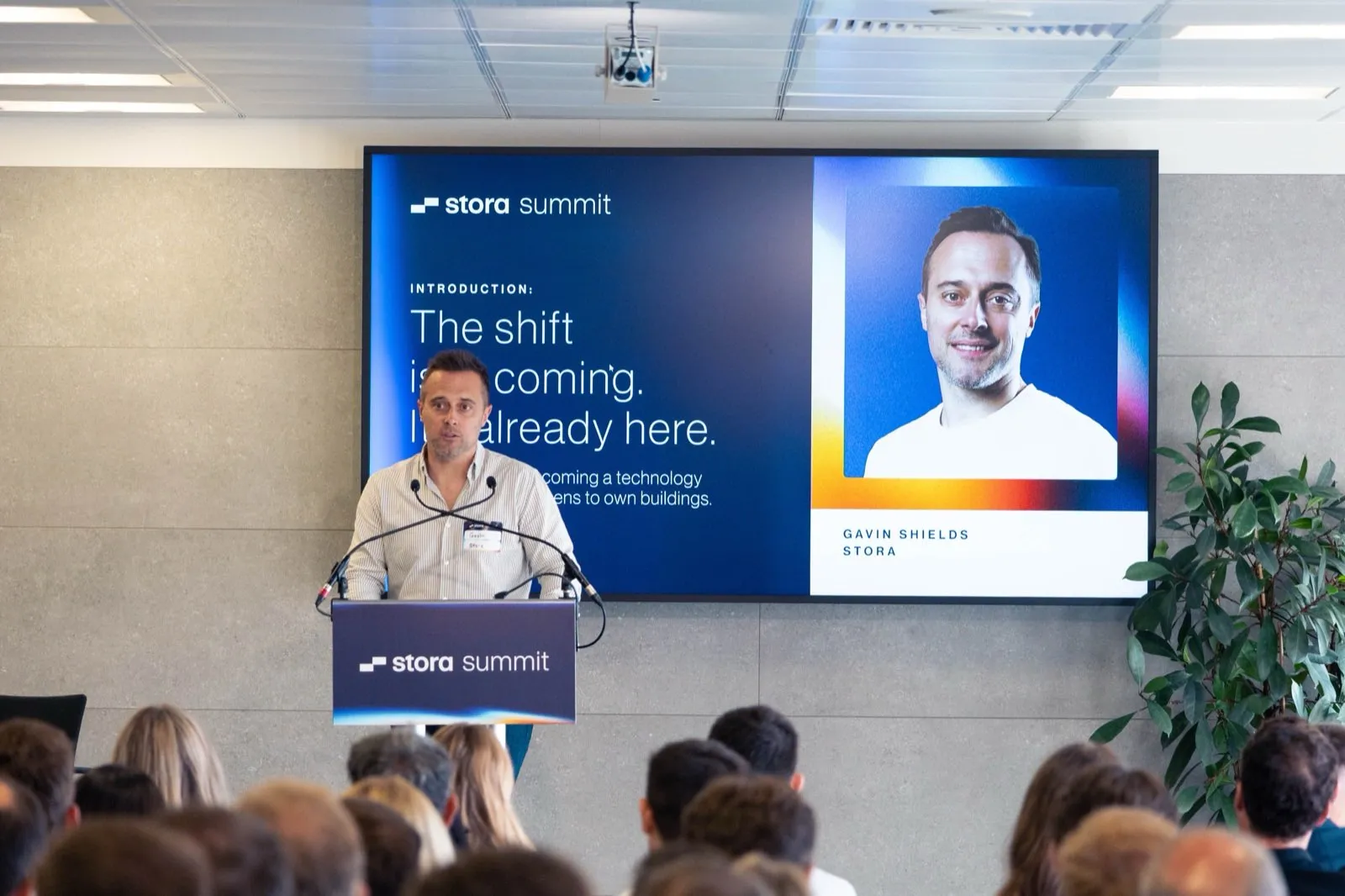
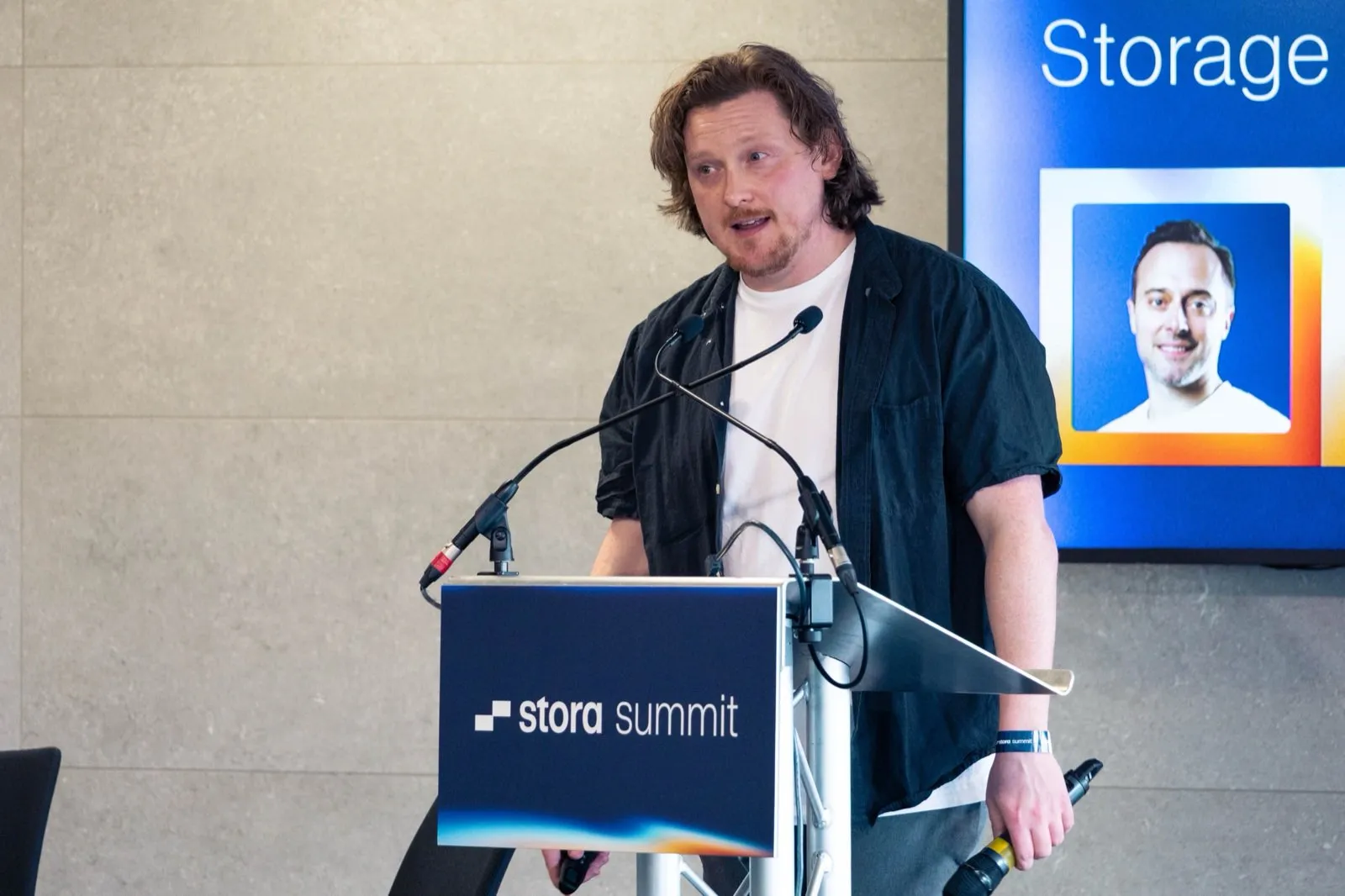
Gavin Shields: I'm going to hand over to a very good friend of mine, Andrew Carlisle, who I don't know, we got chatting before and we started reminiscing. We've known each other for 30 years and we used to play hockey against each other and with each other. We were at uni together. We traveled the world together for a year during our year out, a gap year. And we were just reminiscing over some, and he reminded me how I fell through a wall at a housewarming party, a brand new house. I went backwards through a wall through it, but it was his fault. I always have to blame you for that. So yeah, it's great to have you here. Thanks very much for coming. Andrew is the Managing Director at Accenture in charge of consumer goods, retail and travel with a specific focus on industry transformation. He's going to tell us. Talk to us about what happens when tech eats a traditional industry. Andrew, thanks. [Applause]
Andrew Carlisle: Thank you. Thank you, Gavin. Is this working? Can people hear me? There we go. Thank you for having me. I'm honored to be here. Yeah, Gav called me probably about a month ago now and asked me to come and unpack a few thoughts for this self storage audience. I'm going to talk a lot about retail and what's been happening in retail over the last 20 years, and I've been working in the industry. And I think there's a lot of parallels, actually, for the self storage industry, which I'll get to towards the end of the talk. We'll try and have a little bit of time for questions as well in case anything comes up.
As Gav said, I work for a company called Accenture. We're a global professional services organization, and we help us transform. So I spent the last almost three decades of my career helping retailers adapt to an ever-changing technology landscape and an ever-changing customer and consumer behavior. I've been lucky to work with a huge number of UK and international brands over that time, currently spending a lot of time with Sainsbury's and Boots as they continue to adapt to the wave of both macro- and micro-economic changes that impact their business. I've been lucky enough to live through probably five or six big waves of change in retail.
If I just unpack the last 100 years of retail, at the core, it's quite a simple business. You're buying economic quantities of products or manufacturers and selling them for a profit. That's the core of the business, selling products. Right up until the 1950s, that's all it was, market stall driven, very small operators all across the UK. Then what happened is, they started gathering some pace around a specific brand and we moved into the year of image. Brand became a very important part of retailing. Marks and Spencer's is a great example of a historic brand that still exists today.
In the 90s, there was a massive innovation that came from Tesco, Tesco Clubcard. This concept of having an ongoing relationship with your customers, a lifetime relationship with customers, and Clubcard enabled that. The first loyalty scheme of its kind in the UK. That really changed the nature of both the industry and how we thought about that relationship with customers. It was moving away from just selling products and moving into an era of a consumer relationship. Clearly, the dot-com boom came and I was very lucky to live through some pretty exciting times in those days, setting up websites for major retailers all across the UK. Really, Amazon was the big change at that point. Amazon has changed all of our lives. It's changed our relationship with the retail industry and it set our expectations of speed and really reset the bar. At many points, we thought it was going to be quite a challenge for retailers to adapt, but they are doing that by changing and taking advantage of their core foundations.
The next big shift was then an experience shift. When brands like Uber and Airbnb came, it really taught us all as individuals what an experience should look like. Whether we know it or not, anytime we engage digitally, we're looking for those simple experiences that the Uber and the Airbnb provide in any sector in any industry. That's the competition of experience. Rather than competing within your industry, you're actually competing against a much broader experience landscape. That was the shift there. We're not in an era of relevance. What I mean by relevance is customers and consumers expect some level of personalisation. They expect some level of back and forth relationship where you know them, you know their habits and you're able to tailor your offer for them. That is what the best retailers do today. If you land on their website, every one of you in this room will see a different website for a particular brand based on your behaviours, based on your data, based on your information. That's what's happening already today in retail. Clearly what's coming next is autonomy. What I mean by autonomy is it's easier and easier to train some of the new tools, particularly GenAI, to help make decisions all across the business. I'll touch on some of that in your wave a little bit later in the discussion. Really what we're doing is moving into an era of autonomy where we will have agents running parts of the retail value chain with humans in the loop or in the lead that are helping with some of the big, big decisions. Let me dive into some of these big shifts. I'll talk about six of these big shifts and what it's really meant for retail and how it's transformed the retail industry.
Clearly I touched on brand and the power of brands. M&S as an example. I was actually out with a couple of friends from the beer industry yesterday, which was a good fun day out. They used to run Peroni back in the 2000s and they were the guys that launched a specific glass for your beer. Peroni was the first beer brand that had a specific glass for your beer and that allowed them to drive a premiumization in the product. The actual product was exactly the same but because of the beer taps, because of the experience, because of the glass, they were able to charge much more and consumers wanted that experience. They wanted that premiumization. I think it's just a lovely example of how a brand and the right brand and the right mission can transform your product. At the heart of every retailer is a brand, a brand promise, a set of brand guidelines. What do you stand for? That is the same in self storage, big or small. The power of brand is the kind of fundamental that has lived through retail all its days.
I mentioned loyalty. Loyalty has been through some waves. I mentioned Clubcard and Clubcard kicked off a wave in grocery where loyalty became important. Very important. We then did get into a saturation point where we all find ourselves with 20 or 30 plastic cards sat on our wallet. We weren't sure what to use, when to use them. You know, you kind of, to some extent, there was just too many and it was too fragmented. In the last five years with digital and with our phones, we're moving back to a place where it's very easy. That fragmentation has been solved by mobile phone. Therefore, people like McDonald's, Gregg's every day are really taking advantage of a kind of loyalty proposition in retail. The other important effect it has is the data that you gather on your consumer and then what you do with that data. I said retail is powered by personalization and it's powered by insight into what's happening with consumers to develop new products, to change the industry. All of that is powered by the data that you collect from the loyalty scheme. The third big thing we're seeing in the industry is a whole new revenue stream and an increasingly important revenue stream for retailers and that's called retail media. Businesses like Tesco and Sainsbury use Clubcard and Nectar data to tailor advertising on places like Google and Meta on their own websites and in store and all of that is powered by the data they collect from their consumers. That makes around about 500 million for a business like Sainsbury's per year as a new revenue stream, very high margin. That's why there's two sides to loyalty. There is the value exchange, there's the reason to drive loyalty, but then there's the revenue benefit of having a loyalty scheme that really makes a big, big difference.
The third big fundamental is this concept of removing friction. In any experience, this is back to that concept of Uber or Airbnb, the experience we expect. We expect simple things like a very easy checkout. People will lose patience very, very quickly in the digital world and if you as a retailer are not offering them simplicity and pace, if you're making them go through lots and lots of hoops and hurdles to get the product, they will go somewhere else. There's a real big focus in both in-store and online. How do we just remove all friction from the customer journey? How do we make it really, really, really easy to allow customers to get what they want? They've come to procure a product. How do we make that journey as slick and simple and easy as possible? We call that the pursuit of friction or removing friction. Finding customer problems in your experience and finding simple ways to solve them. We spend a lot of time working on end-to-end customer journey mapping, the overall experience that a customer is having with the retailer to make sure we're finding those moments of friction and removing them. Actually, a great example of this is a business I work with, well, B&Q. We all know B&Q. B&Q, obviously, we've probably all at some point tried home improvement in our life and it's quite a challenging, often a challenging thing to achieve, whether you're doing a big bathroom project or you're putting up a shelf. B&Q took a step back a few years ago and they were like, "All we're doing is selling customers products. We're selling them screws. We're selling them wood. We're not actually helping them achieve their ultimate goal of driving home improvement. Let's offer a range of services that help people actually achieve their task.” So it could be a YouTube video to explain how to put up a shelf. It could be actually connecting products in a different way on their website. So if you put a shelf in your basket, let's find you the right screws and find you that electric drill that you need to do your task. So it's all about thinking differently about that customer journey and making it really, really easy for customers to achieve their ultimate goal. Just an example of that trend in B&Q.
The next big retail fundamental is something we call expectation bleed. So this is the point I made around the best experiences in the industry are your competitors. So beyond the industry, your competitors, you're not actually competing with just the experiences in your industry. You're competing with a much broader set of digital experiences across. If I think about one of the big, big trends in retail right now, it is quick commerce. So it is Deliveroo Uber Eats. I'm working with Boots at the moment. They have gone from about one partner and about 100 orders per week five years ago. And they're now on about 500,000 orders a week on Uber Eats or Deliveroo with three partners. Average age is 31 and actually it's a much more male audience segment. They've had to work really hard to get that experience right and get the right products in to work with those quick commerce vendors like Deliveroo and Uber Eats. And it's creating a whole new channel for them in retail.
The other thing that's changed an awful lot and I will start tying this back to self storage a bit in a bit. But what's really changed in retail is the pace and rhythm. So when I started in retail, it was a weekly rhythm. So you'd come in on a Monday, you'd look at your sales from the weekend, you would try and diagnose what you think happened, you know, maybe it was weather, maybe it was, you know, a big event that happened, you'd try and diagnose and then you'd set some actions for the week ahead. And those would probably go live on a Thursday or a Friday ahead of the next weekend. So you're in this kind of weekly cycle. What it's now moved to is always on, you know, so that's the big thing for digital. So most retailers will be changing thousands and thousands of prices a day, every moment in the day based on a competitive change based on a promotion based on sales. A lot of that is driven by strong data and analytics behind the scenes. I was lucky enough to experience Black Friday at Argos one year. And I sat all day in the kind of cockpit for Black Friday up in Argos and we changed 4,000 prices on Black Friday. We introduced new lines that we hadn't been expecting to based on competitive pressure. We were keeping an eye on the technology stack all day. It is an amazing experience, but if you missed a second, if you missed a small window, you would miss a whole stream of revenue. So, you know, this level of detail has really, really shifted on. I'm also quite lucky to work with Nectar prices at the moment. And Nectar prices is 10 personal prices for each individual Nectar customer based on their buying preferences. You can imagine the amount of data that you have to produce and troll through to drive 10 personal prices for an individual customer. What's my revenue? What's that going to drive in terms of revenue? What's my profitability? Who's going to fund that? Is it supplier? All of that science and data mass is incredibly powerful. So the level of detail and the level of science combined with the art of trading is just a fundamental part of retail now.
And look, the final one is, you know, the future, agentic GenAI gets all a hype and probably overhyped at this moment in time, potentially even a bit of a bubble, but actually using it every day and seeing it start to drive impact in the industry. It is something that is fundamental. It is an iPhone moment, right? It is something that is going to fundamentally change every industry over time. One small example of a project we're doing right now is working with a retailer to create something we call a store brain. So in every major grocery store in the UK, you've got millions of data points flowing through the store all day. So you might have all of the transactions coming through the point of sale. You've got all the security cameras. You've got all your shelf edge labeling, which is mostly electronic these days. You've got hundreds of different feeds coming in and there's no system or solution that kind of processes that all day. It's just, you know, the tasks in the store are still driven by human. So we're building a solution that brings all of that data into one place called the store brain and then it helps make some decisions itself autonomously. So you know, we are running low on bread. Let's send someone straight away to restock the bread right now. The store is quite quiet. The bread aisle is reasonably quiet. Let's send someone right now. So that's an autonomous decision. There'll be then decisions that it flows up to the management level, you know, to make a decision on in real time. And I think it's just a fascinating use of, it's not about humans not in the loop. It's about creating the right signals and the right decision making to drive efficiency and take friction out of that store experience. So all day we can offer that best store experience for the customer. And I think it's those sort of models that we'll start to see an awful lot more of in the industry.
So look, that's a bit of a snapshot of some of the big changes we've seen in the industry. I wanted to touch on a couple of examples of when it doesn't go so well, when a company doesn't quite adapt to the changes that are happening around them. And I think one of the best examples is, is Woolworths in the UK. I'm sure many of us will know that as a brand and kind of what it stood for. And, you know, and it was a huge retailer when I was growing up, somewhere you would, you know, you would spend time in on the high street. It got attacked from every angle. So supermarkets started undercutting it with stationary offers and kind of magazines, newspaper, all of those pieces. And specialists outfocused on particular parts of its category. And the reality is they just didn't notice this happening until it was too late, until they were, you know, until they had lost a purpose. We all knew what their brand was, but they had lost that reason for customers to go in every day. It was easier to go somewhere else. It was, it was simpler to go somewhere else. And they just didn't adapt quick enough. And therefore, and therefore 27,000 people lost lost their jobs. And 800 stores collapsed. And, you know, I think, I think a couple of these are examples of actually very, very successful businesses that were in essence thriving, but were a bit too scared to reinvent their model before someone attacked.
Another great example is Blockbuster. Again, I'm sure many of us grew up with Blockbuster. For those that didn't, it rented physical DVDs or videos for customers. Netflix got in touch with them in 2000 to try sell themselves to Blockbuster for $50,000. And they laughed them out of the room. They were a six billion business at the time. You know, dominant companies rarely lose on product, right? They lose because they can't see that disruption around the corner. They don't adapt their business quick enough. There's one, there's one Blockbuster store I find out, which I didn't realize. I'd love to see where it is. I'd love to go visit it. There's still one left. So we've got to hunt it down.
And then, look, finally, Kodak. So an engineer built the first digital camera in 1975 in Kodak. 1975. The manager team got scared. It was going to cannibalize film. It was going to cannibalize other parts of their business. So they hid it. They shelved it away, assuming no one else would come up with the same concept. Chapter 11 bankruptcy in 2012. So they used to own 90% of the US film market. It's incredible. And gone. So just a couple of examples of if, you know, if you don't adapt your business model as these things change around you, if you don't adapt to consumers, if you don't adapt to the trends in technology, you know, you've got to keep, keep an eye, keep looking around the corner.
Let me touch on, I mean, look, I, you know, I've spent a little bit of time around Gav. I'm not, I'm not a professed self storage expert. That's all of you, all of you folks in the room. But I did want to try and draw a few parallels from retail to self storage. And some of the patterns that I think, you know, might be coming down the line, might be something you need to think about or have a plan around. In talking about it, I think it's, you know, self storage is part retail selling a product, clearly. But it's also part hotel or flight booking. It's part, it's part travel. So you've got that fixed capacity and, and the kind of revenue, the revenue gap if you've got any unsold demand. In some ways, I would call that perishable inventory. So, you know, the same way if I have to write off some strawberries in store and waste them, that's kind of almost what happens if you've got vacant space. And, and I think we've got very dynamic demand. It's, you know, it's much less like a grocery and much more like maybe an Argos, which is very event driven, very driven around different types of demand. So you, you need to be flexible to the peaks and curves of demand and when they're coming.
What do I think some of the things from retail may be impacting self storage. So I think there's an expectation from consumers of pricing transparency in every industry. There was a, there was a retailer in America that actually went as far as publishing its profit. So it broke down the full cost of buying a product. It broke down shipping fees. And it, and it broke down the actual profit margin it was making as full, full price transparency. I don't think we'll ever get into that in, in retail and, you know, and it worked for them part of their brand promise of full transparency. But to, you know, but, but one, I think expectation of customers is when they go to a digital experience, they get a price for some things straight away. And they can compare in seconds, different quotes. I think again, customers expect to be able to complete a journey end-to-end without any human contact. And that sounds odd. But an awful lot of consumers just expect, you know, I think about Deliveroo, Uber Eats, you know, you just have to call, call your takeaway company and place your order. You know, I think, I think a lot of the younger consumers would just find that concept completely alien to have to speak to someone and order, you know, order their Chinese. There's no way they'll ever go back from, from the kind of ability to book capacity in real time 24/7 anytime based on their needs. And finally, I think there's a massive chance to turn experience into differentiator. You know, I think a lot of your journeys, having experienced them myself are very, very similar. You know, what are the things that you could do that make your brand, your business stand out, you know, not just from a price standpoint from an experience standpoint. And that's, that's how a lot of retailers have grown by creating a kind of differential customer proposition. I also don't think you're getting benchmarked against other storage companies. As I said, I think you're, you know, I think your experiences, your online experiences are getting benchmarked against booking a flight, against cancelling a subscription, checking in, Apple Pay, all of these data experiences is, is really the, you know, setting the industry standard for, for self storage.
I don't know what's up in my chart there, but I think one tap, payment is, payment is a hugely important part of any proposition, right? So we've seen a massive decline in cash, 48% down to 9%. I think one in two customers now use Apple Pay day-to-day. It would be rare for me to not use Apple Pay to close out a transaction in any industry in any shape. It would be rare for me to do that these days. So I think you kind of have to meet the customer where they are in terms of that expectation and the, you know, on that and that change in the payment landscape. Dyson, I worked with Dyson for a while. They saw a 2% uplift from Apple Pay at a global level by implementing that. It took them a while because it was quite complex, but a 2% uplift on [Dyson.com](http://Dyson.com). So I think, you know, I think, I think getting your payment infrastructure is important. There's a fundamental shift going on in search. I mean, we're all experiencing it ourselves. ChatGPT, OpenAI that runs ChatGPT now offer a frictionless checkout in the US. So you can search for a product and you can check out of that product all through ChatGPT. That's coming in Europe. There's some regulatory barriers that are being worked through, but probably the second half of this year will be in a place where you can order a product directly through OpenAI without leaving that user interface. You know, I think it will become the go-to for the vast majority of search across retail and across your industry as well. Already 50% use AI to guide their decision making. And 750 billion in the US will flow through AI search by 2028. And just the pace, it's increasing. It's the most common conversation that I am having with retailers right now is agentic search and their agent check out and how to make sure they are being found on ChatGPT and Claude. This back to price, right? I'm a believer price is important, fundamental. Gotta have the right price to drive the right profitability. Gotta be competitive. But I do think there's much more that you can compete on than price, right? There's availability, there's your service, there's trust. I think it's back to that broader brand promise and that expectation. I think an opportunity, just think about how you're competing and how your overall value proposition is coming together. And then watch your strategy for that store brain concept that I talked about in UK grocery, right? What are you going to use agents for to drive your business in the future? So you could already use AI to handle a lot of the routine that comes through your businesses. So FAQs, booking, payment, lead qualification, dynamic pricing, all of those things are available, reasonably easy to do and implement. And then that leaves the human to focus on exceptions, high value customers, local relationships, empathy, helping people day-to-day. So I think just a rethink of your colleagues' roles in your business and what they should be going forward and what should be driven through automation and intelligence.
And I think, I think a lot of these shifts, speaking of Gav, are already happening in self storage, so 15% of stores with no permanent staff on site are obviously not stores of your sites. I think there's already AI agents on inbound calls, a lot of prices already online, a lot of booking already online. So a lot of these trends are here already and flowing through the business already. And you can see it's moving, it's kind of on that trajectory that retail has been on for the last few years of experience change and expectation change. I think Gav said this right at the start, I think it's moving from a property business with a website to a kind of capacity business with dynamic demand. And I think what will disrupt it is operators who use technology better than anyone else in the industry. And that's certainly a trend we've seen in retail as it's progressed.
So I will finish up there, Gavin, if you've got any questions either for me or there's any questions in the room that we want to tackle.
Gavin Shields: Yeah, well yeah, first of all Andrew, thank you so much. I thought that was really, really fascinating. It's amazing how the retail industry is actually such a big part of our lives, you kind of forget, it must be huge, so it's no surprise it's just driving innovation.
Andrew Carlise: Yeah, one in six employed in the country in retail, which is incredible. It's a huge part of the UK economy.
Gavin Shields: Wow, okay. Well, so I might take a couple of questions from the audience if anyone has any, but before we go I was just going to ask one. You mentioned you talked about removing friction and retail industry. Obviously a lot of things are in common with self storage, but one of the big differences is people understand retail inside out as part of their daily lives. Self storage can often be something somebody comes to you for the first time and so they need to learn a bit more about how it works. How do you think people should think about friction in that context because there's a bit of learning sometimes to go on?
Andrew Carlisle: I mean, it's a great question. I think discovery, I think it's thinking about discoverability, I think. So as a consumer, if you're looking for a storage unit, your first entry point is either going to be talking to people and talking to friends, colleagues, Google or one of the new AI engines, I would have thought. That's a typical starting point for retail. So how is your brand then showing up in those three places?
So friends and family, are you in a dialogue with your existing customers? Are you managing that relationship with existing customers? Are you offering deals to customers to help attract friends and family to your business? Such a simple way of driving business is using your existing customers and offering them something. We've all had it, with a credit card and you're offered some points or some sort of discount to introduce a friend. So friends and family. Second one is Google and I'm sure you've all got some sort of SEO strategy, some sort of pay-per-click strategy. That's still hugely important, although negotiate hard because it's moving away and it's moving then into the third category, which is AI. For AI, the reality is a lot of it is about the data that is discoverable on your websites. So really what the AIs are doing is crawling over your existing digital properties and using that to drive results back to customers. So the better, the better quality your data is in your digital estate, the more likely you are to show up to those customers. So I think, you know, I think I’d always think of those simple three.
One really lovely example of business that I think does this really well in retail is Screwfix. So Screwfix have a set of post, paper-based posts they send out to customers based on their kind of customer relationship life cycle. So they've been in, they've done a shop in Screwfix. A month later, if they haven't seen them again, they'll send them one later. Three months, they'll send another letter and then six months they'll send another letter. All of those letters have different colors on them for a little coupon to take into store. And when a colleague in the store sees the color of coupon, they will say, "Oh, Mr. Carlisle, we haven't seen you in three months. How's it going? How's your project going? I saw you bought this last time. Did you get it finished?" What a simple and lovely way of creating a customer experience, making it really easy for the colleague to have a conversation with a customer if they want to. So I think, you know, I think it's that putting the customer first and really thinking about what's going on in the customer's head.
Gavin Shields: Okay, interesting. Is there any questions from the audience? Anybody want to ask anything before we go? Okay, great.
From the audience: You touched on the subject, Andrew, but AI obviously is the future and it's here now. As a business with a website, what advice would you give to a company? Obviously, we've got everyone's competing for the same customers in this world to an extent. What advice would you give us? How do we design our website so that we peer at the top of GPT or OpenAI? Or what keywords is it looking for, algorithms that we need to put on there so that we become the top one or top three companies on there?
Andrew Carlise: Yeah, so you can start to commission audits. There's companies like SEM Rush that will actually audit your estate in the same way you could have done with a kind of SEO strategy in the past. A lot of it still is some of the basic fundamentals of SEO or search engine optimization. So the right quality, the right kind of structure and configuration of your website, the right meta data tagged underneath, the right accessibility standards. And then what you can start to do is actually make some of your website machine-readable so you can start to embed some, I believe it's called, it's like markdown files or some of my technical team are a bit better in that space. We can actually start to embed specific technology in your website that makes it much easier for a ChatGPT or a Claude when it's coming to read and make sense of what your offer is and what your proposition is. So I think maybe try and start with some form of audit and then think about what restructuring I need to do, what additional data do I need, and then is there anything I need to embed to actually make sure I get to the top of those lists.
Gavin Shields: Yeah, just to add, Shopify recently released a feature where retailers can optimize their sites so that the LLMs are picking them up. And I think that's going to be interesting to see where that goes in self storage because it's not happening too much yet, but it does feel like it's a rapid change for discoverability with LLMs and making sure that the LLMs can read your website, the LLMs can see your price, can almost, is it more important in a year's time that a robot can book something on your website rather than a human? What has become more important to think, it'll be interesting in self storage to see where that goes.
Andrew Carlisle: Yeah, I mean the other thing to look into is whether and maybe not size and scale of some of your business just yet, but we are seeing the ability to create an app on ChatGPT. So [booking.com](http://booking.com) have an embedded app on ChatGPT, so when you raise a booking query, it will flow you into their app that they've built and deployed onto ChatGPT in itself. So that embedded app or the app landscape is probably something that will expand across both OpenAI and Claude. I would have thought.
Gavin Shields: I'll add that to our roadmap there, guys at the back. Was there another quick question? I think we've time for one more before we finish up.
From the audience: Hi there. There seems to be a thing with self storage websites that it's either we show our prices or we don't show prices. Okay, when you look at a lot of the retail things there, Amazon, you would, you get the price for everything, you can get the price for a Ryanair flight, all that sort of stuff. But why do the self storage industry hide their prices? I personally show up my prices. I have probably less interaction with customers, but I still get all the bookings. So what's right and what's wrong?
Andrew Carlisle: Yeah, great.
From the audience: Just to follow on from that question, I'm a newbie to the storage industry, but I've spent a long time in the office market and a few of us here in co-working and so on. And the office market has evolved in a way that the self storage market is evolving now, and it went from a very kind of price driven to a very experiential sector. And we've seen big changes at a sector level, at a macro level, whether it's the office market, but also some of the retail examples that you've given. And on this pricing point, it seems very clear for a newbie coming into the industry that a lot of people don't publish their prices, some do, but pretty much everybody without fail gives the first month free, which I find completely nonsensical because there's no competition there. You're just giving away margin, you're potentially giving away 10% a year. [Applause] Thank you. So my question to you is having advised at industry level, at a macro level and a micro level, what advice would you give to this industry to stop giving away free months and free margin?
Andrew Carlisle: That's fascinating. I think just touching on price transparency, I'm surprised there is still a business out there that isn't being transparent on pricing in digital. I can't see the advantage of not, but that's me as a retailer and maybe not as a self storage expert.
The free month is tricky, right? I mean, that is a kind of behavioral and kind of customer insight-driven thing that has maybe become an expectation and would maybe need an industry movement to change that because it sounds like it's quite attractive as a customer. And the logic of getting someone into subscription service is often freemium and then you move them up a pricing tier as you go. I mean, I don't know what you think on that one, Gavin. So it sounds like you're clearly leaving margin on the table, but the risk of not gaining the margin if that remains a standard industry practice for others is the challenge. So it feels like it would need a bit of a sector change.
Gavin Shields: My view of it is I think we should show prices. I think it's just personally for me. That's a personal opinion, I prefer it, but I know that there are people who swear by not doing it, people who swear by doing it. So I think it's still a bit up in the air, but the direction of travel appears to be much more moving towards showing prices.
Andrew Carlisle: What about the first three month?
Gavin Shields: You will see a bit of that. I think there's a lot of first month, the first month for a euro or a pound. There's a lot of half price for the first eight weeks, half price for the first two months, it varies. But at these events we can often be talking about stop discounting so much and stuff. It's a local business too. You're competing with a five-mile radius, it all depends.
Andrew Carlisle: Look, Aldi and Lidl are probably best example of retail of doing something called everyday low price. You remove all the gimmicks, you remove all these promotions that actually probably confuse customers overall, and you just give the best available price that gives you the margin you want. They have, they’re now fourth and fifth in the UK grocery market. A non-promotional strategy, if done in the right way, can work. But you're probably net out at a similar margin overall. You're just giving the most attractive monthly price and using that as the hook. Probably then you'll be slightly cheaper than the competition on a monthly run rate and you lose your first month.
Gavin Shields: We'll be touching on this this afternoon. Adrian Lee from Big Yellow is going to be touching on some of this as well.
Final question. You've had a mullet since before they were cool. Have you made them cool or was it just luck?
Andrew Carlisle: I got very bored during COVID doing a lot of Teams calls. I was excited to see how long it would take before I could grow a mullet for someone who'd noticed it on a Teams call and it took a year. So by the time someone noticed it was down around my shoulders. So I decided to keep it.
Gavin Shields: Thanks so much. That's really fascinating. Thanks a lot.
Andrew Carlisle: Thanks for having me.
Aled Bidder: Thanks so much, Andrew. That was awesome. It's great to see the conversations already started. Questions coming in. Thanks so much for the questions.
At the start, I did ask everyone if they could just turn their phones off. Of course, you expect someone might forget. I didn't expect the CEO to forget.