
Deep dive: revenue optimisation & dynamic pricing
Practical takeaways on dynamic pricing, ECRI, street rates, and the data + automation levers driving revenue growth today.
Referenten

Adrian Lee
Big Yellow

Will Strivens
Gatewick Farm Storage

Gavin Shields
Stora
Key takeaways
- Three revenue levers work together: base (rack) price, dynamic pricing, and existing-customer rate increases.
- Existing customers should fund the discounts you give new ones — the way your phone, broadband and TV bills already work.
- The maths is large. A 20% rate lift on a 250-unit site is roughly £96k a year of near-pure profit, and £1–2m of extra valuation on that site alone at 10–20x EBITDA.
- Avoid the US habit of re-pricing daily against competitors. That’s a race to the bottom.
“You’ve just got to do it, and you’ll be surprised how many people don’t even notice.” — Will Strivens, Gatewick Farm Storage
Full transcript
This transcript is auto-generated, so it may contain errors.
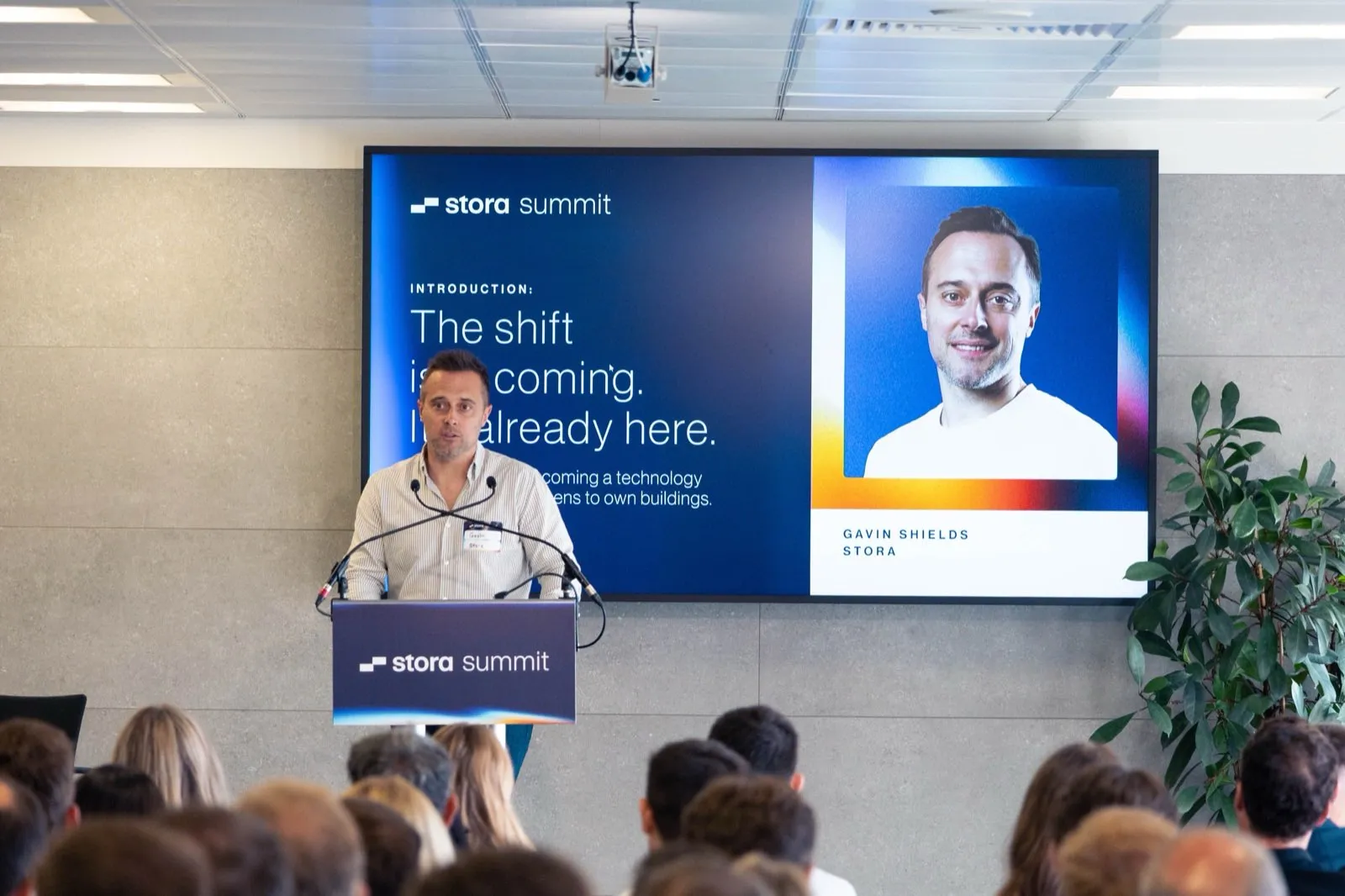
Gavin Shields: Yeah, so I'm gonna talk for a little bit about one of my favorite topics, which Ollie has already kind of set up very nicely, which is revenue optimization. And we're gonna talk about that chart that we went through there, showing occupancy levels kind of flat-ish, but rate per sq ft (RevPAF) going up over time. That's what I really get pretty excited about, because I think, for all operators, that is just such a really, really great way to grow your business once you've hit kind of high levels of occupancy.
So I'll use a clicker for this. Okay, okay, okay. So, right. I'm not gonna kick this off. I'm gonna start off actually with Adrian Lee from Big Yellow. So Adrian Lee was the COO of Big Yellow, I think from founding in 1999 up until two years ago, and he ran that business and did a lot of this kind of revenue optimization. I got to know Adrian, met him for the first time properly about a year ago, got to know each other, and Adrian has recently joined to advise us at Stora. So he's kind of working with us to help us figure out a lot of this stuff and bring some of the tools and processes that a large operator like Big Yellow brought to the business, and bring them into Stora and make them available to our user base.
So I'm gonna, Adrian couldn't make it today, sadly, but he has got a video. So I'm gonna run the video here, and we'll start with that.
Adrian Lee: Hi everyone, Adrian Lee here, and I'm sending you my apologies that I won't be with you at the Stora silent in person. I hope that this first conference is both challenging and enjoyable day for you all.
I've started working with Gavin in the Stora team to continue with their award-winning software product, and I want to assist them to design into it some of the features that a larger operator would want to see: their customer service, the customer attraction, and their revenue management. And today, I want to share with you, in a few minutes, how the larger operators think about revenue optimization.
Revenue optimization is the single biggest lever that you have to use once your site is occupied, or hopefully mature. But there are three interconnecting parts of that that you need to think about, and they work best when managed together. The first of those is the base room pricing that you give to each room. You then have your dynamic pricing, which you adjust to based on availability for the new customers that move in, and then, for existing customers, the price increase process that you use. Your base room pricing is set with reference to your competition and also to your product quality. Don't race to the bottom. If you have the best product in town, price for it. And your discounting strategy, your 50% off for eight weeks, or your first month for a pound, is part of that base pricing and is not separate from it. It needs to be considered together. But don't forget to adjust your base pricing on an annual basis, to give yourself an inflation increase. Your dynamic pricing is layered on top of your base price, and this will adjust your base price depending on each unit size and availability of that unit size. The point is to sell your rooms at the best possible price that you have plenty of. But a word of warning on the American model of adjusting your pricing daily based on what your competitors are doing: that's just a race to the bottom and benefits no operator. Set your model, let it run, and review the outcomes.
Your existing customer rent increases are the part that many operators try and avoid, and the key principle here is that your existing customers need to pay for the discounts that you're giving to your new customers. You should set up a matrix of price increases based on how far above or below the base price each customer is. For customers that are close to, or above, the base price, smaller increases are given. For customers that are further away from the base price, larger increases need to be given. Don't just leave your customer moving rate at the same price as where they started, and don't be afraid to let your customers pay more than your base price. Think about your phone bill, your broadband bill, your Sky subscription. The new offer is always cheaper than what loyal customers are paying. That's just how pricing works in mature business, and self storage is no different. Sit down with your team every six months for a business review. Look at your base prices. Look at your discounting in your office. How is your dynamic pricing set up, and what's your customer price increase process? Treat it all as a system. Set it up, let it run, and review it on a regular basis.
This is exactly the kind of thinking that the Stora team is building into its product, and which is why I'm working with them. We want every business owner to benefit from the revenue optimization plans that larger operators routinely put in place. I hope you enjoy the rest of today.
Gavin Shields: Is this working? Okay, yeah. So Adrian gave a lot of info there, and I'm sure for lots of the operators there might, there may be nothing new there, but there's hopefully some stuff in there that might make you think, or something that might be new.
Whenever Adrian was over in the office with us a couple of weeks ago with the product team, talking through this stuff, some of it we hadn't even thought of actually, and it was really, really interesting to hear from him. So the three things that he talked about are, number one, the base price and, as part of that, that's your discount strategy as well, the rack rate really. The second part is your dynamic pricing, which is altering the price live for customers as they're coming in based on demand or occupancy. And then there's the part that he touched on quite a bit, which is your existing customer rent increases, which is really important as well.
So we're going to talk through each one a little bit more. And I think one of the, we're going to touch also on just existing customer rent increases. One of the things that I hear a lot from customers is just a bit of hesitancy around doing it. And I think Adrian touched on it there: customers are used to getting an increase on the Sky bill and your phone bill, and so it's kind of part of a mature industry, which I think is reassuring to hear as well. Okay, so why does this matter? And I think this is, I actually pulled the, I stole all these slides, or one of the slides, the three charts on here, is what really, really interests me about this topic. Because once you're kind of at 80% full, and Adrian also used the term with me, they used to talk in summers. So you should think like, how long is it going to take for us to fill up? Two summers? Three summers? Four summers? Once you get to that kind of 80% occupancy rate level, what are you going to do from then on? And these charts really show for me where a big area of focus should be for your self storage business once you hit that stage.
Okay, so let's look at some actual numbers and what this means. So if you can raise your rents, through existing customer increases and dynamic pricing, by 20%, which is less than within those two charts, if you can do it by more than 20, by 20% over a two-year period, then on this example, you have 250 units, you're 80% full, 200 pounds a unit. Let's just say you maintain your occupancy at 80%. You would grow your revenue by 480 a year, from 480 thousand pounds a year to 576 thousand pounds a year, and that's a 96 thousand pounds a year increase, 20% increase to your revenue by driving up that price over time. That's a significant amount of money, obviously, and because there's no additional cost of providing this, it goes straight to the bottom line. There's almost a hundred thousand pounds of additional profit. That's, you know, very attractive to get that. But what I think is the real kicker, when you really sort of think about what's the impact of this, it's the valuation of the business. You know, if you ever do want to sell, or go to sell, or raise debt, whatever, there's going to be a valuation on your site and your business, and that is where this really kicks in. So at a 10 to 20x multiple of EBITDA, you're talking about, just from turning this on, an additional one to two million pound additional valuation on this site alone, which I just think is such a fascinating and compelling number when we think about how we're running our business going forward. So that's why, for me, it really does matter that, you know, we talk through this and we have it as a tool that we can use in our businesses as well.
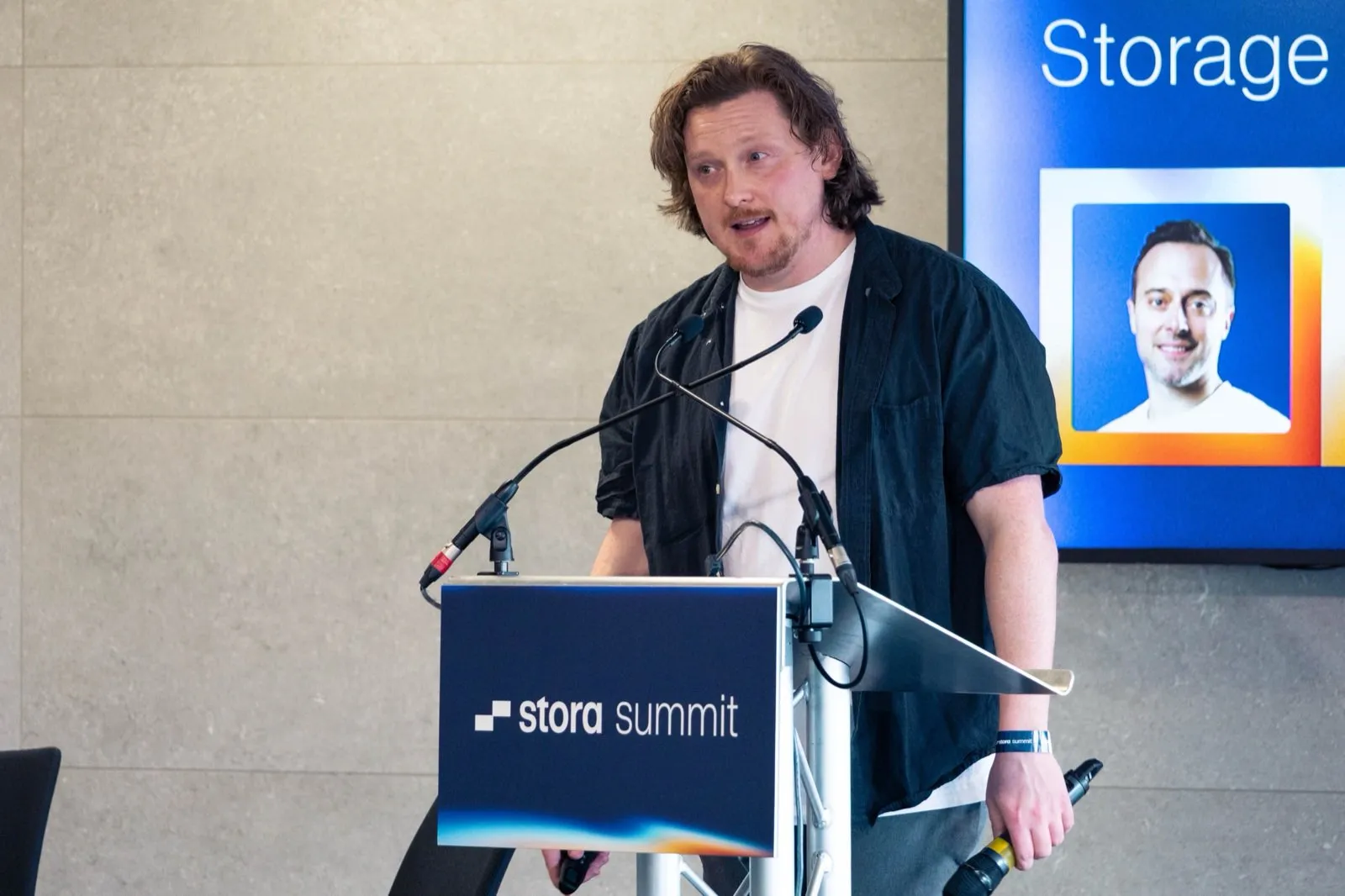
Okay, I wanted to go, so I just gonna go back one. I wanted to go now, and I have picked a victim. Will Strivens is here somewhere. Will? Oh, I'm just gonna ask Will a few questions. He's been doing this at his site as well, and so we're gonna ask a couple questions about his experience. Will, before we ask a couple of questions, can you just give us a one second, or five, thirty seconds, on your site and your self storage business?
Will Strivens: Yeah, so we are basically a farming family, and I've sort of started working the business for probably the last four or five years. Prior to that, I was a tree surgeon, so that's sort of where my knowledge base comes from, so nothing really to do with self storage. Mostly what we do is caravan and motor storage. We've also got some shipping containers, and we've just opened a new indoor facility as well for indoor self storage.
Gavin Shields: Thank you. So, Will, I’ve come down here to ask a couple questions, just to bring some of this to life as somebody who's been doing this for a while. So what have you been doing in terms of revenue optimization so far?
Will Strivens: Well, I'm quite pleased actually, because pretty much everything that's been set up there. So what we did was, I've sort of inherited a mature, over-occupied store, like demand was super high. So what we did basically was just kept pushing the rack rate up to sort of see where the ceiling would be and where bookings would maybe slow down a bit. Then we use that to kind of test the market, basically, and then we've just been doing big increases for the existing customers.
There's lots of old customers on legacy pricing, which have been hit the hardest. Some of them having like 25% increases. There's, well, we've got about 700 customers, so some of them have been hit real hard, and there's like two people maybe that left, and one of them came back on the higher rack rate afterwards anyway when they left. So yeah, now we've actually built some occupancy, we've got some spare occupancy to play with. It means we can start using the dynamic pricing, because we didn't, we couldn't really use dynamic pricing because our occupancy was full all time anyway.
Gavin Shields: So, and how's it going so far? What are the results of this so far? Like, what are you seeing in terms of revenue, profit?
Will Strivens: So just with the shipping containers, we've got 60 shipping containers, and it works out about 950 quid a month increase just from them. So with the vehicle storage, it's a little bit muddier, because the billing periods are different and things like that. But across the whole site, it's like 30 grand a year better off, just from targeting the existing customer increases and setting the price where you want it to be, not worrying too much if they're going to leave, because what we found is that people don't really leave.
Also, I think if you're going to do an increase for an existing customer, set it where you want. Then if they come back to you, you can maybe kind of ease off a little bit, but you still increased your price, so you're still winning basically.
Gavin Shields: That's what I was gonna just finish off by asking. Have you had, one of the big concerns, even myself with my own sites, you know, a while back, you're just worried you don't kind of want a customer getting too annoyed, or kind of getting annoyed. It was coming in and causing a problem. Have you had any pushback from customers? How have you found the customer reaction? You've obviously mentioned a few move-outs, but any, how do you deal with it? Have you had it happen much?
Will Strivens: Yeah, so there's been a couple. None of them have been like horrendous kind of situations to deal with. I reckon if you get your messaging right to the customers when you send out the increases, then that's kind of half the battle as well.
So we've obviously used Stora for all of this whole process, and we can kind of tweak and set those how we want. And yeah, one person was a little bit difficult, but they're an old customer on a legacy price, so they're the one you kind of want to lose anyway, because they get replaced with someone on the new rack rate.
Gavin Shields: Okay, thanks Will. Final thing, if anybody who is looking at this and thinking, yeah, kind of hesitating, any bit of advice for anyone?
Will Strivens: I would say, just, you've just got to do it, and you'll be surprised how many people don't even notice or get back to you. I think if you can, like, quietly justify it as well, so you have something in your head. The other good thing I like about using Stora as well, if we do get any kickback, I just sort of blame it on the system. I'm like, oh yeah, sorry, it's automated. Then I become the hero. I'm like, I'll sort you out a deal and I'll do them a deal, and then it's kind of an all-round win, really. So yeah, definitely, do it.
Gavin Shields: So blame the system, then. That would just say, blame Stora. Okay, yeah, thanks very much, Will. Okay, so thank you, Will. That was really interesting to hear an operator who's actually doing this. Is this on as well? Okay, and cool.
Okay, so I just want to touch briefly then on just these three things, just like, how do you do it? And we've pulled in a couple of Stora screenshots here, but not everyone's using Stora. Whatever you're using, this is pretty straightforward.
Set your rack rates. Look at your competitors and your product quality. I think that was a really interesting point from Adrian on his video there. Just think about what I liked about what he was saying. It's just don't over-focus on your competitors. Think about your product, where you want to be, your business, where you want your price to be. Don't get obsessed with beating competitors’ pricing. I think that's a really healthy way to think about building your business. And don't rest at the bottom. Treat discounts as part of that base price, and you know, it's interesting to hear what discount being used at the moment.
The other thing, the thing that, I mean, I have one site left now back in Northern Ireland that is very, it's a bit ignored unfortunately, but he mentioned nudging up your base price every year for inflation. I thought, why did I not even thought of that? I hadn't thought about myself. So I went and did a catch up. We put it up by about 10 or 15 percent, because I hadn't done it for five years. But yeah, like, just, it's such an obvious thing really, but then you sometimes need to be, you need something to tell you to do it.
So yeah, as a quick thing to go back to, maybe if you want to look at this when you go back, look at where your current customers are. Look at your current street price. If there's a gap, do a bit of work and, you know, think we're trying to close that gap and drive a bit of revenue there on the business.
The second part then is dynamic pricing. Interestingly, I think what Adrian had used in the past was just occupancy-based pricing, so taking kind of, you know, once you're over 70%, do that. Over 80%, do that. It wasn't really taking into account necessarily demand. So, you know, I think this is another nice little way of optimizing your price. So if you want to think about what you could do, if you don't have this turned on, if you are a Stora customer, I'd recommend turning it on. If you're not, you know, think about how you can turn this on at your business. It's a great way to also just build your business up over time.
And then the final one we've talked about is the existing customer rent increases. Really, really important, and that is the part, the main part there, I think that's driving that chart that Ollie shared, and how, you know, you grow 20% on your rate per square foot. So I really think, look at that. Look where you are. If you're afraid of doing it, try a few, see how you get on. But, you know, I think we hear from the bigger operators that it's a core part of running a modern, mature business in a modern, mature industry.
Okay, so before I finish up here, I just wanted to, I suppose, say the way we see our role in all of this. You know, why are we talking about this? And our role, we see, is always to try and help our customers succeed. So, you know, at the moment, we have some of these tools built in. But, you know, I think, really looking forward, and you know, we aren't trying to build these tools just so you can do it. We want to get to the point where the systems can do it for you. I think that's the key thing you should be looking for in a product, in a piece of technology, as we move forward. Tools and systems that can just run on your behalf and help your business improve. That's the way we think. That's the way we're bringing our business. That's the way the business is going.
You know, we want to bring, as Adrian said, the things that these big operators have had for years and get them into the hands of every independent operator and, you know, all operators, give everyone a chance to grow and optimise their business over time. So that's where we're going. We've already started with a little bit of this. So we've just launched this report in Stora today, which is basically all these charts, but it shows you your occupancy level and will show you kind of how you can, as you make changes to these, along these tools, how you can adjust that rent per square foot over time. So this is already live in Stora, or it's live in today, and so that's what we're thinking. Now, there's lots more to come. And, you know, as I said, we see it as our job to get these kind of tools into people's hands so they can build the best possible self storage business.
Okay, so I've got through that. I'm probably speaking far too fast, so apologies if I'm talking too fast, but got through that a little bit quicker than planned. And I'm sure there's any questions, I'm happy to take something. But other than that, we're going to think of what’s next.
*Question from the audience.*
Gavin Shields: Yeah, well, I think that's up to what you said. So I can answer that for Stora. You can have it so it, you know, if you're below a certain percentage, it will go that you can have a good down as well. So yeah, it depends how you want to run it. I don't know what the best practice is really. I'm not sure what would have happened in some of these other businesses, to be honest, but I imagine it happens just to drive those bookings.
From the audience: Hi Gavin, and something you and I have spoke about a couple of times, and I was speaking to a couple of colleagues today about, you know, I've got a note in my system today where we can put some rate increases in. People have been with us over six months, bring us 150-200 quid, but we can lose that with the discount with a new customer who maybe isn't going to ask for it or doesn't really require it.
And I've asked about the opportunity to put in something, if they say, for example, they're only staying for six weeks, we don't get the 50%, or they don't get the two months. And I think that would be a great help for everybody, because I think the discount system, from what I've seen, I'm only in industry two years, as you know, is really driven by the industry, and I don't believe it's driven by the customers. We're all scared to not do it because the guy down the road is doing it.
Gavin Shields: So are you wondering if, is there a, should you potentially only make the discount available if they stay a certain amount of time? Yeah, yeah. So I think, yeah, in the Stora system, well, I'll add it to the list of things to get done, but it's not there at the moment. But yeah, you could certainly put in the contract and, you know, then handle it kind of on a case-by-case basis.
I think I did it as somebody at one of my sites a few weeks ago, cancelling and moving in straight into the same unit again for a discount, and I've only ever seen that happen once, and I thought, once in seven years. But I think, yeah, the interest actually to almost give, you know, the third month is half price, or the third month is free. Yeah, yeah.
*Question from the audience.*
Gavin Shields: Yeah, yeah, I suppose it is. Yeah, that's what I suppose. Whatever the, whatever's in the terms, whatever's fair to customers. Yeah, and different ways to do that. I'll come over to that afterwards about what you're trying to achieve there. Okay, great. I'll hand over to Aled.
Aled Bidder: Thanks very much, Gavin.