
Honest conversations about running a storage business
The conversations operators rarely hear publicly — growing pains, mistakes and lessons from building a 23-site portfolio over two decades.
Speakers
Andy Egerton
Ready Steady Store
Mark Mailer
Ready Steady Store
Key takeaways
- A 2022 trip to the US was the turning point: sites of 100–150k sq ft run by one person prompted a hard push to automate and centralise.
- Centralise almost everything — one sales centre, one customer service centre — for consistency, and to tell whether a problem is the market or the people.
- Biggest regret: not moving to the cloud sooner, and over-complicating sites with vans, forklifts and deliveries. Wage inflation will outpace revenue growth, so keep it simple.
- Pricing by anecdote backfires. Undercutting the Heathrow market by 20% dragged the whole market down, and the store never recovered. Use data.
Full transcript
This transcript is auto-generated, so it may contain errors.
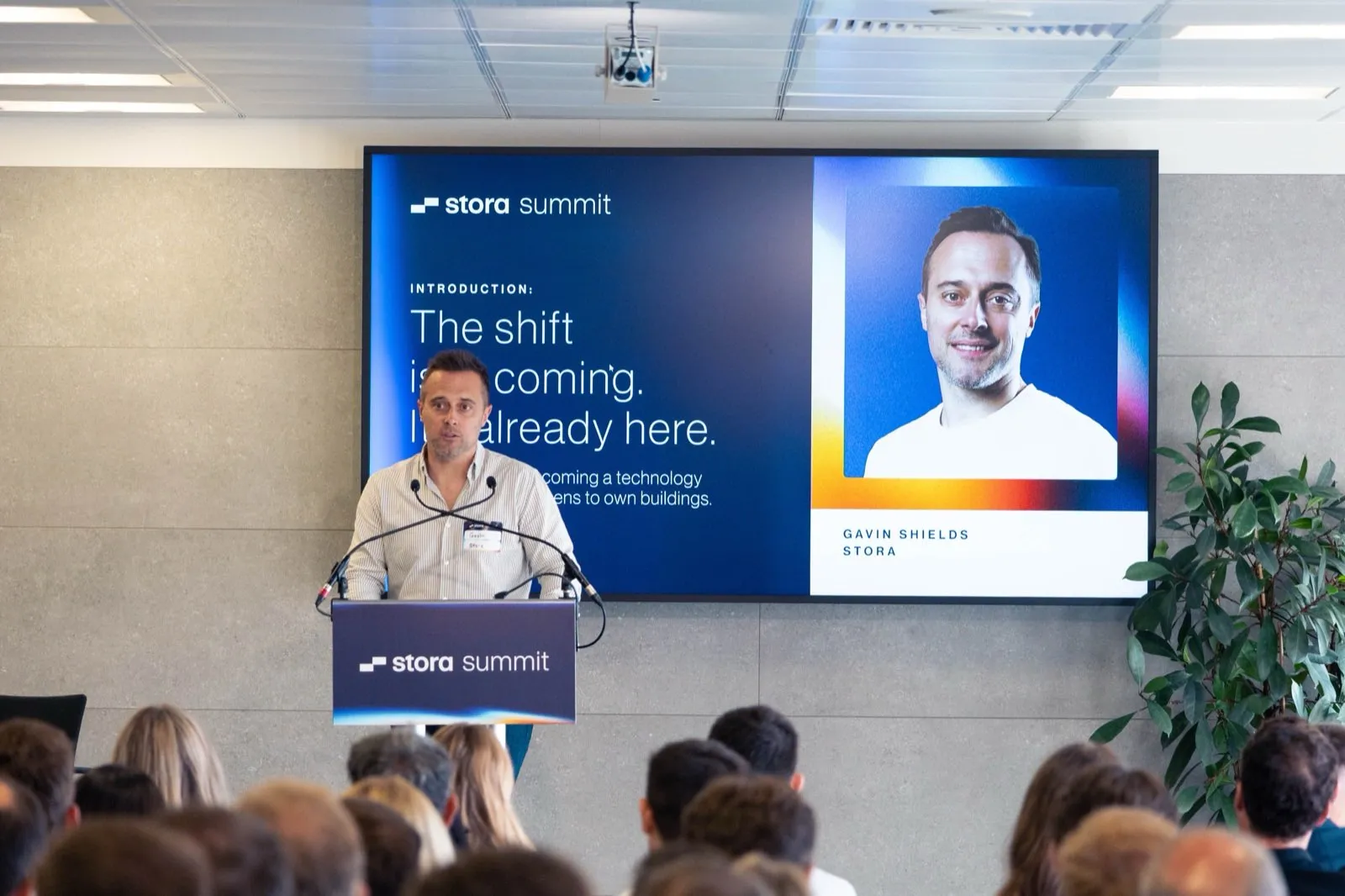
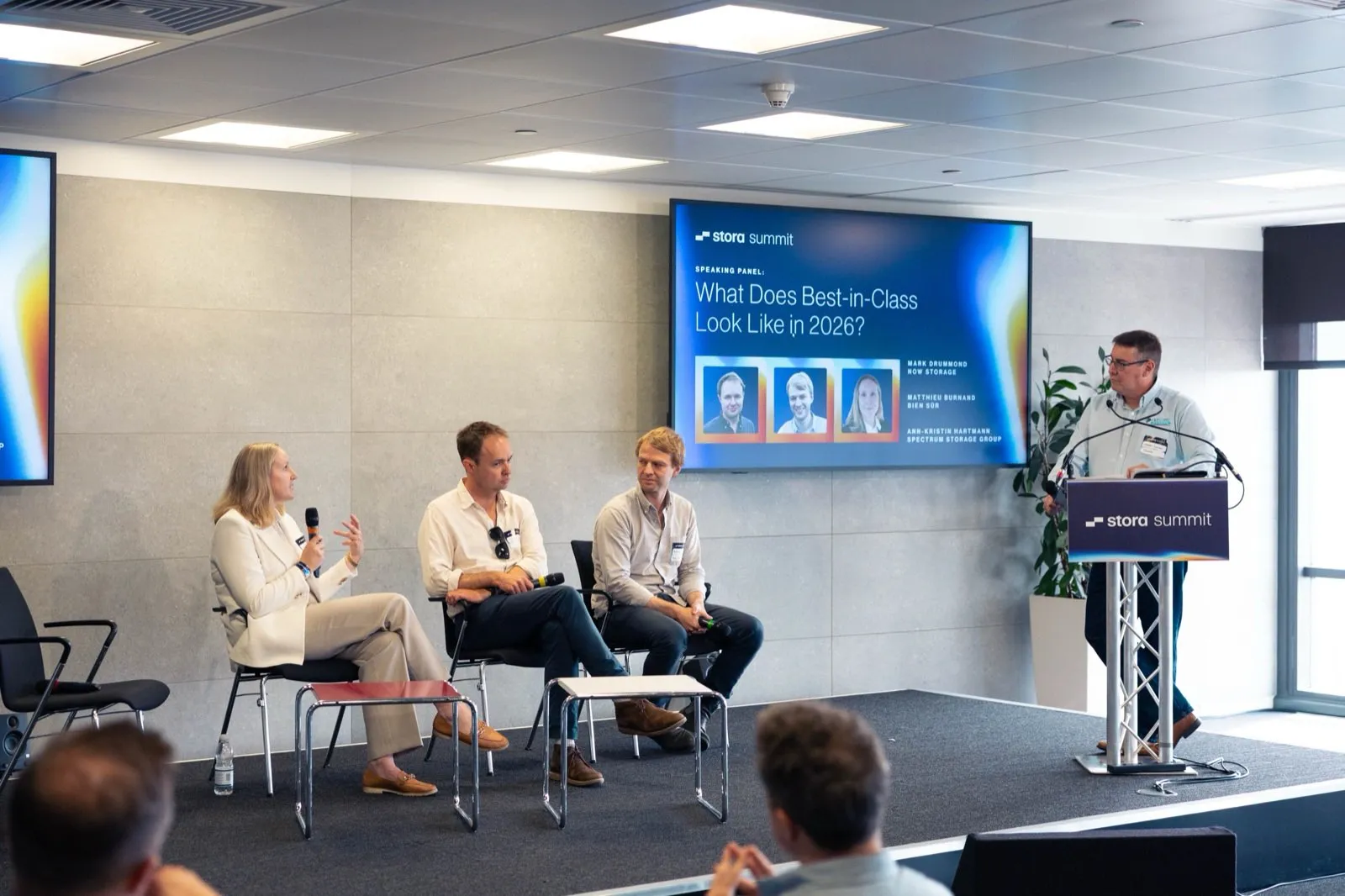
Aled Bidder: Right, next up, we're gonna switch gears. We've talked about tech and pricing and what best-in-class looks like, and now we're gonna dig into the honest reality of running and growing a storage business.
So this conversation is chaired by Gavin and joined by Andy Egerton and Mark Mailer from Ready Steady Store, who have grown from a single site in 2005 into one of the UK's biggest indoor storage operators, with a portfolio of 23 sites. So please welcome them all to the stage.
Gavin Shields: Okay, well, thank you so much for joining us. I think this is gonna be the highlight of the afternoon session, and really looking forward to asking you and learning more about your journey. So thanks for joining us.
Okay, so maybe we'll start with you, Andy. Take us back to the start. What did the business look like in the early days, and did you ever imagine it becoming what it is now?
Andy Egerton: I think we always intended it to be where it is now, but we'd opened seven sites, with the seventh opening in 2008, so really the bad time to be opening seven big stores, because the financial crisis hit and all of the growth plans were put on hold. So I think, in one way, it slowed us down. In another way, it made us really look at the operation, look at, you know, what we do, the processes, and really learn how to fill up the details in pretty crappy environment, which helps. You know, it's sort of helped us get to where we've got to today.
Gavin Shields: And then how long did it take for you to kind of come out of that, like the financial, like that phase? Did it feel like a difficult few years, or was it just a...
Andy Egerton: It was about six years. So we opened one more in about 2010, and then we got to 2014. And so we sat there with eight sites, and we got a management contract for the Alligator portfolio, which was 12. So overnight, we went from 8 to 20. And I can say we probably learn a hell of a lot more with that, especially, you know, you're managing other people's money then. So you can't just keep going like an owner-operator. You're managing somebody else's millions, and they kind of care what you do. So yeah, I think we learn a lot through that as well.
Gavin Shields: Before I ask any more questions, I should have asked you to just maybe briefly introduce yourself and your role at Ready Steady Store.
Andy Egerton: Yes, I'm the Operations Director, so I'm in charge of the day-to-day, overseeing all of our department heads and making sure that we're delivering the returns that we need to return, really.
Mark Mailer: Hi, yeah, I'm the Head of IT at Ready Steady Store. So everything to do with all our systems, integrations, databases, the whole gamut from that journey of, yeah, what was it, 10 years ago? I probably started getting involved. And obviously, self storage has changed, IT has changed, everything's kept changing, and yeah, keeping pace with that.
Gavin Shields: And these are the top standard, Mark, but how did you grow from the seven sites, the sites then, you know, that contracted? How has the growth been? Like, has there been much organic growth? Has it been from acquisition? What's been the strategy for getting to those numbers?
Mark Mailer: I think we've done everything, really. So we've acquired. We've added value. We've sold. We've made new sites. It's kind of everything. And normally, it seems to be everything in life always happens at the same time. Just as you're going, okay, we've got three sites we can buy, or portfolio of eight, actually we want to sell three, or one of the managers wants to sell three of the sites at the same time. So you've got this incoming, outgoing, juggling everything going on while still trying to keep the actual business running, all the operation running.
So normally the most stressful inflection points. Of late, it's been a bit more stable growth, a bit more steady, bringing on sites. And then recently, we sort of started to, yeah, grow a few more again. It's been a really tough environment to find sites to acquire, to the capital starting to grow again, as I alluded to. But obviously, COVID and all the disruption around there as well has made it for lots of interesting times.
Gavin Shields: Was there a moment then throughout the journey that you can point to the business changing a bit? You know, from kind of a small, you know, starting off business, maybe there's one for you, Andy. Like, at what point did it change kind of character?
Andy Egerton: I think it's changed. It's been evolution. And I think it's fair to say that we've pretty much tried everything there is out there to try. We've probably made every mistake is possible to have made. But I think, as long as you learn from it, it's okay.
I think, for us, the managing 12 sites, and I think it was about 600,000 square feet of space on behalf of an American fund, that really made us grow up a bit in our thinking. And, you know, it was just a lot more about, you know, you've got to report in the right way. They want to know every single number. They want to know what you're gonna do, how you're gonna do it, when you're gonna do it by. And actually, amazingly, over the three years we had those, we hit every number we told them we'd hit. And then somebody decided to vote for Brexit, and the Americans wanted out. So we just got to the point where these things were purring, and then they left.
I think the other one, the fundamental change that we've had in recent years, was we did a trip to the self storage conference in Vegas. And we went there thinking, right, what we know, what we do, what can we do better? How are these guys using tech? What is it they're doing that we can bring to our business and improve it? And actually, when we got there, we visited, I think it was seven sites in Vegas in the sort of three, four days we were there. And what we found is they were running 100, 150,000 square foot sites with one person in an office. And I'm back here with three people in a 25,000 square foot site, and it's like, what the hell are we doing? So it was very much, I know, I came back from that trip and said to Mark, right, we need to start automated and centralizing here. And I think the big thing it made us realize is we're overcomplicating it.
People generally want self storage. If you're offering office space, receipt and dispatch, you know, deliveries, you're offering all these different things. The reality is, in some of your smaller stores, it means you need three staff, and you're not making enough extra on the additional two staff for what you're offering. So I think, for us, that was a big game changer, and it's really led our recent journey, in which Mark's been one of the drivers for us.
Gavin Shields: What year was that you were in Vegas? Was it before COVID?
Andy Egerton: It was 2022, I think, so we've done a lot in the last three, four years.
Gavin Shields: You mentioned there that you've made lots of mistakes, Mark or Andy. What would some of the biggest mistakes, or the things that you'd like other people in the audience to know so they can avoid them?
Mark Mailer: Yeah, I mean, from a technology point of view, I think the analogy is you have to kiss a few frogs before one of them turns into a prince. So we've gone through quite a number of IT partners, either through connectivity or, you know, general supply, general help desk.
Probably one of those mistakes was moving from, we had 20 plus sites, a whole MPLS network through it, you know, central servers, etc. And we essentially had the opportunity to move to a much more cloud-based platform, but we were too cautious. So we went, we'll change suppliers and do the same thing. Turned out the supplier wasn't as good as the last supplier, and we're basically in the same place with worse service. And then unpicking telecoms contracts and three years, etc., so that took a lot of time to unpick and go, right, be brave, change, go completely cloud-first. And that was sort of the big inflection point. And in doing that, we found a brilliant help desk. So whilst we used to have a basic help desk for our internal staff, and then it'd end up on our internal IT team doing stupid stuff and waste of time stuff, they handle so much of it now. And means our IT is more internally, it's all strategic. You know, we're not focused on every day today.
Andy Egerton: I think I'll add. So we opened some sites on behalf of an investor, and it was a very traditional self storage investor who were very focused on average rate for a market. So we opened the store. Their main metric was average rate, and so I obviously held the prices very high. The store rented up quite slowly, and it was the not really saying to them, look, I can fill this thing quicker, I can make you more money, but, you know, you're looking at the wrong metric.
So the next one with them, I went the opposite way and ended up completely trashing the market rate, because everybody else followed us down, and actually that store didn't recover. So we trashed the market. It was in Heathrow, so it's a London market. Everybody followed us, and that was, you know, obviously a mistake. So I think since then, we've, you know, we have a lot more data that drives decisions rather than, you know, let's just undercut the market by 20%. Because I think, as most people in the room are probably found, you reduce your price 20%, quite often everybody else reduces the 20% as well, and you're not really gaining anything.
And I think it goes back to the gentleman over there has mentioned the, you know, first month free or eight weeks half price or whatever. We all do it. It's just costing us revenue, but it's difficult to get out of once you've started doing it.
Gavin Shields: And taking a step back then, like, and how you run your sites as well. Like, what is your approach to your site? How many staff do you have on average per site?
Andy Egerton: We've got it down. So we have been on a journey of centralization. So I think a lot of people will see sort of centralizing and reducing staff at site as a way of saving money. I think it does definitely get your costs. There's no doubt about it. But what it actually does, it gives us consistency, because you've got a central call center who handling every call in the same way. So we tend to run now with most of our sites run with a caretaker who's in for eight or sixteen hours a week. The larger sites will potentially have a full-time member of staff as well dealing with, you know, so that the sort of 50,000 sites. I think we've got two in one store. But we have got about 12 central staff now dealing with one side dealing with customer service, one side dealing with sales. And again, that makes a lot more measurable, because I think if you've got sites in different markets and you know that it's the same people dealing with your sales, who are consistent, it tells you when your market rate's wrong. You know, whereas if you've got, for want of a better way of putting it, fairly shitty sales people in a store, you don't know whether it's them or it's the market. So I think what this gives us, it gives us a much better idea of when we're getting things wrong.
Gavin Shields: Okay, so it's a bit like Matt earlier talked about, what you're centralizing, what you're not centralizing. You centralized quite a bit, and that's been a change that you've made.
Andy Egerton: We've centralized almost everything, and I think it just gives us that consistency. So I think, you know, when we're looking at somebody, I guess when I joined the industry 25 years ago, I had to do everything in a store. So I was cleaning the toilets. I was chasing debt. I was, you know, doing sales.
I think the reality in this day and age is there's not many people out there who want to do that. I think back when I started, I was probably on three times what somebody in a supermarket would earn to do that job. These days, if you're paying somebody three times what a supermarket person would earn, they're gonna be on 70, 80k, and they're not gonna want to clean the toilet. So, you know, I think it's now unrealistic to find somebody who wants to do it all. And I think, you know, having a specialist who's dealing with your bad debt, a specialist who's dealing with, you know, all of those things, and having a sales call center and a customer services call center, for us, just gives us that consistent focus for customers.
Gavin Shields: Great. Mark, you've built a lot of systems there in the business, and you've implemented a lot, like really quite cutting-edge stuff with access control and different bits and pieces. Where would you say that has paid off so far, and what are the examples of areas where you've done stuff that haven't paid off and you wouldn't like to undo?
Mark Mailer: Yeah, I guess, you know, the example of not moving to the cloud soon enough was definitely one of those where it didn't pay off. We needed to move quicker and be, you know, probably to Ollie's point, you know, be brave. Be brave with your revenue. Be brave with the technology. You know, take those jumps, because it's gonna happen, and it's whether you're on the forefront. You're gonna make mistakes with some of it, so the sooner you embrace it, make those mistakes and learn, the better.
What we have ended up building, you know, some of their stuff is legacy platform, some of it stuff we're sort of stuck with. So we spent, you know, a lot of our energies internally building those platforms, building the systems to allow that centralization, allow the pricing. You know, the pricing model is something we've always kept close to our hearts, and it's a core part of that business, is how you onboard and how you price to do that. So we've always kept that, and that's been a central part of our own systems, and how we gather the competitive pricing, how that feeds in, how the inquiry data feeds in, how that builds out that entire sort of pricing model.
Similarly, when we've centralized more and more functions into a call center, we've made sure that that's all automated. So the calls are automated, yeah, and this technology has been around for a long time. It's just how you tie it back into all your systems and how you utilize that data. So probably the most recent one is, you're asking the call center all the time, what's the feedback? What are the customers saying? What are the points of friction? How can we make this better? How can we sell better? They will tell you either about the last call they had, or the last person who complained, or anything. So you missed the real signal in all the noise. So, similar to what the Safestore CEO had suggested, we analyze all the calls. We push all those through AI. We get a daily report off every department, which tells you objectively what's happened within the department, where we need to go, what we need to do next. So it's those kind of policy night either by we've been able to do by centralizing, because we can gather all that data, and it's allowed us to keep pushing forward as much as we can.
Gavin Shields: Thank you, Mark. When you look at operators who, you know, maybe who are out here who haven't reached the scale you're at yet, would you put your growth over this, over the 20 odd years, would you put it down to timing? Would you put it down to judgment? What do you think has been the core driver of your ability to reach the scale you're at?
Andy Egerton: It's a bit of all of them, I think. Some, look, when people have approached us to manage, I think, you know, we've been in the right place at the right time sometimes. But I think, you know, over the years we've managed, I think now, 43 sites in total. 20 of them now, we don't, and say still we got most of those unfortunately, but still, it's, you know, we've had to sort of change what we've done. And I think the big thing for me, if you speak to any of my team, they will probably say, we, you know, I don't pat them on the back enough. We don't celebrate success, because, you know, I think you've got to be hungry, and you've got to be saying, right, okay, we've done okay, but how can we do better? What would we do differently next time?
And I think sometimes, and I'm not saying people in this room, but certainly when I've been to self storage conferences, you speak to people who are the expert, who know everything. And I think once you get into that, you're not going to win about your north. So I think you've always got to be checking everything. And I think, as Mark said, you know, don't rely on anecdotal things. Your staff will tell you the person that shouted at them. So you've had one person shout, they will tell you that's the issue. They've actually had ten other people mentioned something else. That's your real issue. So I think, you know, there's enough data in this business to be able to say where your enquiry is coming from. Where are you converting them from? What rate are you getting? You know, the dynamic pricing thing, I think is, you know, if your conversion's there, push your price up until your conversion stops being there. And if your conversion's not there or occupancy's falling, drop the rate for a while. You know, don't, I think that the bit you said earlier, you know, don't be afraid of rate increases. Because genuinely, we did a similar thing when we've made an acquisition. People were paying peanuts, and we got to the point we filled it. We doubled most people's rates, and the reality is, if those customers need storage, they were finding that actually, in the market, they couldn't get anything cheaper, so they just stick. So yeah, probably answered two questions.
Gavin Shields: And what would you say has been the hardest period of the business? What's been the toughest time, and what did you learn from that?
Andy Egerton: I think the toughest was right at the start. Just because the financial crisis hit, we were in a market where there was very little awareness of the product, nobody was moving house, nobody had any money, everybody was being told it's all doom and gloom. And we're sat there with, I think at the time, it must have been 350,000 square foot of space, which is pretty much empty. So, you know, it wasn't easy. And I think again, you know, we'd sort of gone traditional. You know, I think a lot of people know we had Doug Perkins, who had worked for Big Yellow, help us set up, and we'd sort of gone with that three or four staff per store. And three or four staff per store, when your stores are empty, nobody's moving in, and, you know, the banker kind of saying, well, you know, you're gonna pay your interest bill this month or not, that puts under a lot of pressure. But I think also it's all about taking these things and learning from them. And I think, you know, that's the good thing about storage. It's incredibly resilient. There's no doubt about that.
Gavin Shields: If you were starting Ready Steady Store again today, you know, knowing everything, you know, everything that's going on in the market today, what would you do differently?
Mark Mailer: You'd get Stora, wouldn’t you? I'm sure you'll get that. Yeah, no, but I mean, on that, it would be the foundations. I mean, we've inherited, and when we've acquired, you acquire naming conventions and room numbers and things that don't make sense, and odd sizes. And, you know, if you go back to Andy's point in the US, you know, the fewer number of unit sizes you've got, the easier it is to manage at any kind of scale.
So trying to harmonize the whole portfolio from the start would be an enormous benefit. It just allows you the thinking space, the room to grow, room to expand, rather than fitting every size in, you know. Even if you're going to lose, you know, some revenue on the unit size, for example, you know, you go, actually it's, we're going to price it at 75 despite it being an 85, because we don't want 380 files at this site on their own, because it's just another metric we need to work in. So it's those kind of things, and that's your sort of foundational sort of data layer on the IT. Keep it as simple as possible.
Andy Egerton: Yeah, and I think that's it. I think if we were starting again today, we wouldn't overcomplicate it. You know, we started, we had vans in every store, we had forklifts in every store, we were offering delivery services. I think we've tried the parcel drop-off point at one point. You know, we've tried all these things, and all you're doing is you're guaranteeing that you need two, three, four staff per store.
And I think, you know, the biggest thing that's going, I think it's already a big thing for me, is the way wages have gone up has put a lot of pressure on us. And I think if you look at the next five years, the trajectory is wages will go up another 25% in the next five years. If you've got three people per site, you've got to be it. I think the wage inflation will outpace the revenue growth, and that's where I think the pressure is going to be. So I think, for us, we would have simplified it on day one. There's no doubt.
Gavin Shields: What about geographically? Like, would you be focusing on the UK, a particular part of the UK? How would you feel about size site as well? Would you be going for bigger sites? Would you be thinking about smaller sites?
Andy Egerton: I think back in the day the 50,000 square foot were the way forward. I think you've just got to adapt to the market. So the sites that we have, our legacy sites, so to speak, they're all doing well. But certainly recently, our focus has changed onto smaller sites in slightly more micro locations, because a lot of the bigger players here will all go for the same market.
I mean, we have a store in Peterborough, and I think on the StorTrack data, I tried my best, I can't find a more saturated market than Peterborough, and yet people still go there. And, you know, speaking to people, I think there's three more operators opening leads. So unless you're able to compete on having a very big marketing budget or having something which is unique, it's avoiding those locations and going for the one where you're serving a market. You know, we spoke to Darren from Henley self storage. You know, Henley's a great little town. It's going to do really well, and there's not going to be, you know, it'll be amazed at Big Yellow go to Henley. You know, it's that kind of thing. So I think it's evolving and adapting to the market as it goes.
Gavin Shields: And that sort of leads well into the next question, which is about, so when you think about what you do today, what do you think the next five years holds for self storage? Like, what are the big changes that you like that haven't maybe happened yet that you see coming?
Andy Egerton: I think the AI thing is big, but I would say certainly now the AI is there to tell you what your data is really telling you. So as Mark said, we have something like a hundred thousand calls a year go through our call center. Every single one of them now is transcribed, and we can tell very, very quickly, or I can tell Mark, right, ten people have complained about this bit of tech, sort it out, where else?
You know, so I think those things are, that's where we're at now. I think the changes over the next five years, I think everybody's gonna have to automate. They're gonna have to do some kind of centralization, or they're gonna have to partner with a management company who can offer all of that, or Stora, who can offer a lot more.
Because I think the reality of can you get three good staff on a site consistently across multiple sites, I'd say even now that's, it's very tenuous, and I think in five years' time, not a cat in hell's chance. So to me, it's about, you know, doing that and partnering with people who've already got that or who've got the scale.
Gavin Shields: Do you see any changes coming, Mark, over the next five years?
Mark Mailer: Yeah, I mean certainly on the technical side, and, you know, the access controls are gonna become more and more. And I think again, it's a hard product, because even when we talk with our marketing company, and it's like, there's always this concept of, look, we'll get lookalike audiences and we'll find people who like self storage. You know, it's hard, the brand, because you need self storage. It's normally predicated by a life event. So most people are driven into it by necessity, not desire. So you're always gonna have that driver.
Now, the more and more you can make that frictionless, the more it becomes just actually a transactional cost, the better it's gonna come. And I think that the knowledge is gonna become more aware, that the platforms are gonna become better and better to allow people to understand it, to understand what they need to do, to be able to do these things without it.
And, you know, as apps, more and more apps rolled out, more and more access rolls out, you know, you're gonna have that control without, you know, as they say, human in the loop. But again, it's gonna be perhaps a call center or, you know, someone meeting on an appointment, but largely, you know, we sort of have to be fairly honest. I mean, our chairman always says, you know, it's a box of air. You know, in terms of product, you know, if you're configuring a brand new car, I get it. It's a big purchase. There's a million options. You've got all of these things. For us, it is a relatively simple product. It's just we need to educate the customer.
And I think if we can, yeah, push that through, those points of friction will become less and less. And ultimately, look, I think, you know, Deliveroo has proven that people will take the easiest option. You know, if you can get someone on a moped to deliver you a tube of toothpaste, people will do it, right, a massive premium. So, you know, that's probably where we're gonna be able to work those angles. Yeah, just push that convenience more and more.
Gavin Shields: Okay, and just to sort of wrap it up then, is there any one lesson that you would give to anybody in the audience who's getting started or quite early in their journey in self storage?
Andy Egerton: I think, where you can afford it, go to the best in class to get whatever you need. So, you know, for us, we pissed around for years with crappy Heads of Marketing who really, you know, spent a lot of our money, didn't necessarily understand the difference between volume of enquiries and quality enquiries. And we found that we know, we've gone to one of the largest marketing agencies in the UK now, and actually, they've saved us a shit ton of cash. I think that's what I would say.
So I think, where you can, you know, hook up with a decent software provider. You know, go and get the experience of experts out there. Go and speak to some management companies, see what they can offer. Not trying to pitch, but we're doing that as well, if anybody in the room wants to chat later.
But, you know, go and speak to people. Find out what you're doing. And I think if you try and do it all yourself, you're gonna make mistakes, and there's nothing wrong with that. But I think the days of, you know, leaflet drops, posters at railway stations, you know, we used to hand out bags at train stations and things like that, yes, there's a need, that there's a bit in there. But if you go for the right digital marketing and things like that, you're just gonna do better. And again, just use the data you've got. Don't assume anything. I think there's too many people who run things on anecdotal, and you've got all the data you could ever need in your storage.
Gavin Shields: So Andy, you're saying go for best in class, use the data and the hard, like just, you know, I guess, yeah, get the best people you can and be prepared to invest?
Andy Egerton: Definitely, yeah, that's what I say.
Mark Mailer: I guess it's similar. You know, the difference between poor IT support for our company was so much time wasted arguing over nothing. You know, and we're no longer focused on the strategy. We're just trying to keep the lights on.
You know, finding a decent help desk, a decent IT partner, you know, decent marketing company, just allows you to focus on whatever you want to do, be it growth, be acquisition, be it playing golf, right. Whatever that is you want from your business, it means you can do it with partners you can trust. And that's the bit. And as I say, we've been to a few, so it takes a while.
Gavin Shields: Okay, well, I think this is, for me, one of the first times I've heard your story like this publicly. So thank you very much. Been really, really interesting. Thanks a lot.
Does anybody have any questions for Andy or Mark here about their journey with Ready Steady Store? And if anyone asks, it's a good time, they can't escape.
Okay, that's good because we've got one. Sorry.
From the audience: You know you said you have 12 people in your centralised office, and half are customer service and half sales. When those calls come in, how do you actually, if it is a customer service scenario, are the salespeople always answering them? Do they pass them over to them?
Andy Egerton: No, we have the IVR set up that it will go to the correct place. So it can identify when it's an existing customer. If they're calling from a no number, they will choose sales or customer services, and yeah, they get diverted to the correct place.
And to be honest, most of the sales is outbound, because if somebody puts an enquiry onto the website, they just get room straight away, and then we reach out to that customer. So yeah, most of the CS is inbound, and most of the sales is outbound.
From the audience: Sorry, it makes sense to just have customer service or sales. Yeah, cheers, thank you.
From the audience: Hi Andy. As you opened up new sites, did you always buy the sites, and what sort of investment were you talking about, any different sites and return investment expected?
Andy Egerton: So back in the day, we were all freehold. So our original seven were all freehold. Through acquisitions, we've got a mixture of leasehold and freehold. And quite candidly, we're now opening, at the moment, leaseholds, just because it eats up less capital. And we've run the numbers, and they're just gonna kick out cash very quickly. So, you know, we've opened three this year, and one of them was just this week. That's already 20% full. The other two already 40% full. So it's kind of, you know, it's getting your model right to do what you need it to do.
So I think if you're in it for a long term, you want the value in the property, then freehold's obviously way forward. I think a mix is fine. And, you know, the ROI thing is a really difficult thing to answer. But I know certainly on the leasehold bonds, we expect to get all the cash, all the CapEx, legals, and everything back within the first two years, and then they're just kicking out money for the next 25 years at least. So that is, well, I've got quite a lot hanging on my head if it goes wrong, but that's certainly what I think is the way forward.
Gavin Shields: So, okay, well guys, thanks very much. It's been really great to have you. Thanks so much for your time and all the other things. So yeah, cheers. Thank you. Thank you again.
Aled Bidder: So we'll take a short break now. Refreshments, again, are outside. This is also your last chance to get to the Ask Us Anything desk and grab some time with the teams up there before the final stretch. So we'll be back in here at 4.15 for the last two sessions, and yeah, don’t be late. They are brilliant. Thank you.