


Research shows that consumers are willing to pay more for anything that saves them time or simplifies their day, and that includes self storage.
You can see this shift clearly among groups like renters with limited storage space, students who move often, and small businesses that need quick access to inventory. They’re all looking for self storage that supports their needs without the hassle of heavy lifting.
To meet that demand, some operators have started adding a valet storage solution to their business. These valet services appeal to people who live in dense urban areas, prefer added convenience, or don’t have a car.
Nearly 8.5% of U.S. households don’t own a vehicle and in the U.K., the share is even larger. About 22% of households in England have no car, with that figure exceeding 40% in greater London.
This highlights a clear gap in the market. Traditional self storage assumes customers can transport items themselves, but millions can’t or won’t.
In this article, we’ll show you how to assess whether a valet storage solution is right for your customers’ storage needs, choose the best service structure, and set up the digital tools you need to keep everything running smoothly.
What is Valet Storage?
A valet storage service is a convenience-led storage solution where you collect, store, and return a customer’s personal items on demand.
Instead of driving to a storage facility, renting a storage unit, and doing the heavy lifting themselves, customers schedule a pickup.
Your team arrives at their home or business, records each of their stored items, handles the transport, and brings everything back when they request a return.
This simple idea changes how people experience self storage. A typical valet storage workflow includes:
Online booking and pickup
Customers book through your online portal, choose a time window, and provide details. This helps you allocate staff, plan routes, and prepare for specific storage requirements.
On-site collection and item recording
Your team visits the customer, packs or collects packed items, and records each one. This documentation helps prevent mistakes, protects against theft, and supports inventory management.
Transport to your facility
Items are loaded into your vehicles and taken back to your storage facility. Efficient routing, proper equipment, and safe handling keep costs down and protect belongings.
Secure storage and item tracking
Once on-site, items are placed in a designated storage unit and logged in your system so customers can see what’s stored at any time. Strong inventory tracking makes it easy to accommodate return requests quickly.
On-demand return delivery
When customers need to retrieve items, they schedule a delivery through your online portal. Your team retrieves the items and delivers them to their door, saving them time and reducing their need for movers.
Benefits of Valet Storage Services

Valet storage eliminates the effort customers normally put into using traditional self storage.
By offering a door-to-door full service that handles heavy lifting, transport, and returns, valet storage delivers a level of convenience that traditional self storage can’t match.
It turns storage into a premium experience rather than a time-consuming task.
But it doesn’t only benefit customers. Here’s how implementing valet services can benefit your business:
New revenue opportunities
Pickup fees, delivery fees, and item-level storage charges help you earn more money, especially when paired with transparent pricing to avoid confusion or hidden fees.
Access to new customers
Valet storage brings in people who might never consider a traditional storage unit.
Urban renters without a car, students moving between terms, and small businesses needing flexible inventory are all more likely to choose a valet option because it fits their storage needs.
Stronger differentiation in competitive markets
In dense urban areas, offering valet services gives your storage facility a clear edge over competitors who offer only traditional storage.
Higher customer satisfaction
A service that saves customers time and effort naturally builds loyalty. When people feel cared for and supported, they’re less likely to shop around and more likely to stay with your facility long term.
More efficient use of staff time
Predictable pickup and delivery windows make staffing more manageable across your storage facility.
Your team can follow planned routes that make better use of labor during both peak and off-peak periods.
How to Set Up a Valet Storage Service

Below, we’ll walk through each step involved so you can launch a valet self storage solution that works from day one.
1. Understand your market segments
Before you launch a valet storage service, take time to confirm that it fits your local market.
Start by identifying the customer groups most likely to benefit. They may include:
- Urban renters who don’t own cars
- Students moving between terms
- Military families who relocate often
- Elderly customers who need help with lifting
- Small businesses with fluctuating storage requirements
Review your local demographics, including car ownership rates, population density, and the presence of universities or large rental communities.
These indicators directly correlate with demand for valet storage.
You can also gauge demand by monitoring search trends, noting the questions customers ask, and checking whether competitors in your region have introduced valet services.
If customers are already showing a desire for more convenience, that’s a strong sign that it’s the right fit for your business.
2. Choose your valet storage service model
Once you understand your market, the next step is choosing a valet storage solution that fits your customers, your location, and your operational capacity.
Most valet storage businesses fall into one of two structures, each with clear advantages depending on how dense your service area is and how your team is staffed:
Full-service pickup and delivery
This is the model most people associate with valet storage.
Your team collects items from the customer, transports them to your facility, stores them, and returns them on demand.
It offers the highest level of convenience and tends to command the strongest pricing power.
Pros:
- Highly convenient for customers
- Works well in dense urban areas where car ownership is low
- Strong revenue potential
Cons:
- Requires reliable staffing and routing
- Higher operational complexity
Full-service models are very common in urban areas like New York and central London, where tight streets and limited parking make traditional self storage difficult for residents.
Hybrid models
Hybrid valet storage still removes friction but reduces the operational load on your team.
They’re popular with new operators testing demand or those serving wider areas because they let you offer convenience without committing to the full cost and complexity of a complete pickup-and-return operation.
Typical variations include:
- Pickup only: You collect items, but returns happen during set windows or at designated drop-off points.
- Zone-based delivery: Customers outside your core area pay higher fees or receive fewer delivery windows.
- Box programs: Customers pack items into pre-supplied boxes that your team collects. These programs work well for smaller loads or seasonal items.
Pros:
- Lower staffing and vehicle demands
- Easier to scale because you control return schedules
- Keeps travel predictable
Cons:
- Offers less convenience than a full-service valet storage solution
- Requires more customer communication to set expectations
- Works best for small items rather than furniture or equipment
Operators near large universities often start with box programs because demand spikes predictably during move-in and move-out periods, and items are consistent in size.
3. Plan logistics and operations
A valet storage service relies on reliable operations. The more predictable your logistics, the easier it is to control costs, protect staff time, and deliver a strong customer experience.
Start by building out the core components of your pickup-and-return workflow and documenting them clearly for your team.
Vehicles, insurance, and routing
Choose vehicles that fit your storage requirements.
Small vans work well in dense areas. Larger vans or box trucks may be more efficient in suburban markets where customers often store bulkier items.
Confirm that your commercial insurance policy covers transport, loading, and any staff handling activities off-site. As your service grows, revisit vehicle coverage and consider additional protections for high-value commercial customers.
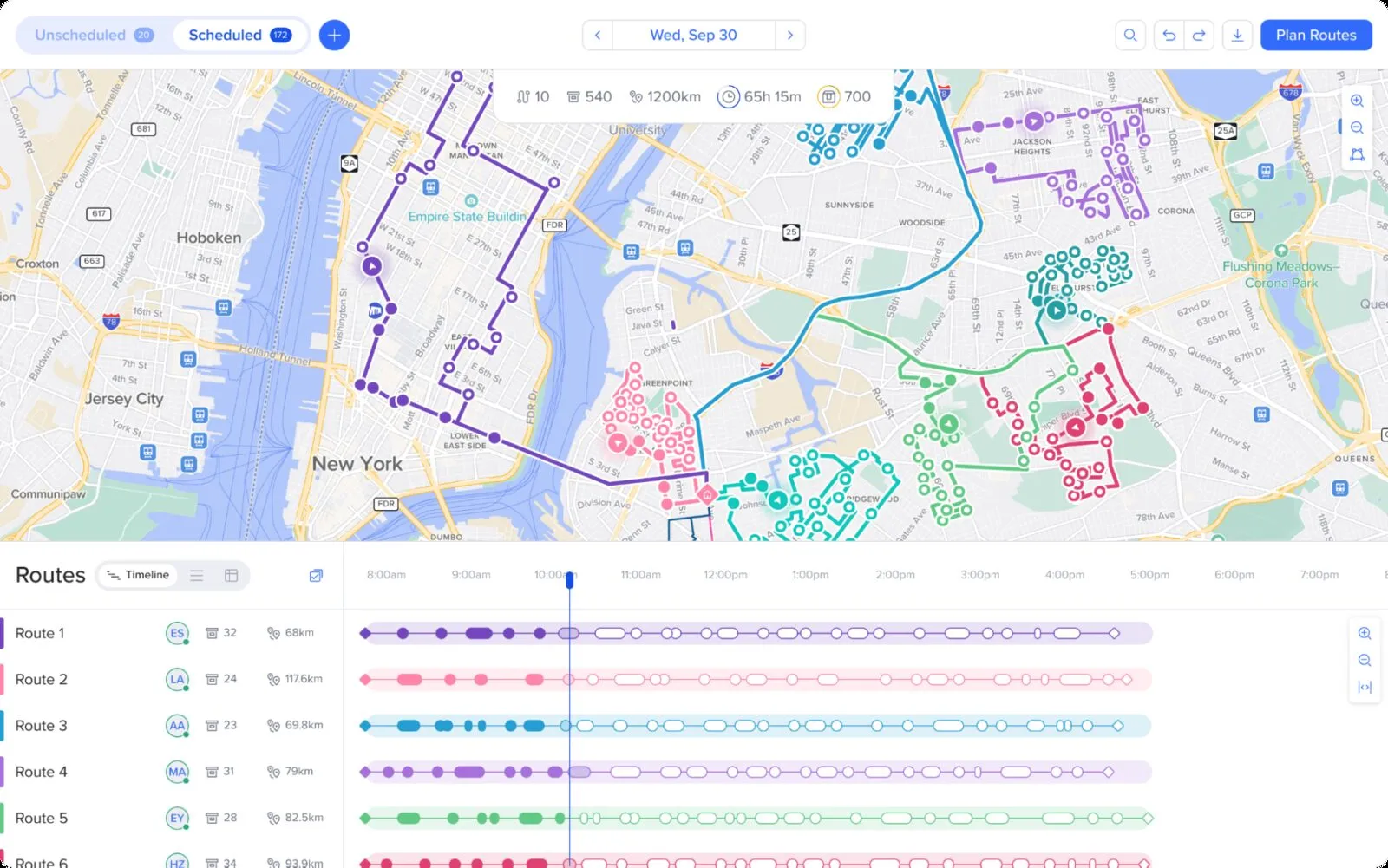
Route planning is where costs can creep up if not managed well. Group pickups and returns by zone, cluster jobs at compatible times, and avoid crisscrossing wide service areas.
A dedicated routing tool can make this dramatically easier. Operators often use platforms like Routific, Onfleet, or Circuit for Teams because they specialise in route optimisation for delivery operations.
Staff training, scheduling, and safety
Your team becomes the face of your service, so training is essential.
Teach staff how to communicate with customers, document items accurately, and handle belongings safely. Emphasize lifting techniques, property protection, and how to navigate different building types.
Scheduling should balance predictable demand with flexibility. Many operators start with defined pickup windows to help control labor costs and routing.
💡Our recommendation: Start with two pickup windows per day (e.g. 9am–11am and 2pm–4pm) and expand only when you see consistent demand.
Equipment and intake tools
Give your team the right tools to work efficiently. Typically, that includes:
- Dollies and carts for safe loading
- Moving blankets and protective materials
- Pre-labeled barcodes or QR codes for item tracking
- Stackable bins or containers for small-item storage
- Photo documentation tools
Reliable intake equipment reduces damage risk and ensures every item is logged correctly before it enters your storage facility.
Controlled loading zones and access
If you use a designated loading area inside your storage facility, smart access control can help you manage pickups, returns, and internal movements securely.
Modern security features (such as CCTV surveillance) improve visibility and make sure only authorized staff can access sensitive areas.
For a deeper look at technology options, read our article on The Top 9 Smart Self Storage Access Control Systems.
4. Build an inventory and tracking system

Strong inventory management is the backbone of a valet storage service.
Because customers aren’t placing items into a storage unit themselves, they rely on you to know exactly what’s been collected, where it’s stored, and how quickly it can be retrieved.
Item-level visibility is what makes the entire concept of valet storage reliable.
Most operators use a combination of simple tools to keep intake consistent:
- Barcodes: Affordable and easy to scan with basic devices.
- QR codes: More flexible than barcodes and ideal for operators who want to store photos or notes with each item.
- Photo logs: Essential for condition records, especially for furniture or commercial equipment.
- Mobile apps: Helpful for on-the-go intake and reducing manual data entry.
A consistent workflow improves accuracy, keeps items accessible, and helps you accommodate customer requests quickly.
A typical workflow looks like this:
- Scan or assign a code as soon as the item is collected.
- Take a photo to document item condition.
- Add notes for fragile, oversized, or high-value items.
- Load items in order so unloading and placement remain organized.
- Map items to a location inside your storage facility.
- Sync the record with your customer-facing system so customers can see what’s stored.
5. Price your valet storage service
Getting your pricing right is one of the most important steps in launching valet storage. You’re no longer just selling space.
Pricing should reflect the value you provide: storage space, labor, transportation, and convenience.
Most valet storage models combine several elements:
Per-item or per-box fees
Ideal for smaller loads, students, and small businesses. You charge a set amount per box or item stored, often with a minimum.
Monthly storage fees
A recurring charge based on volume, number of boxes, or an equivalent unit size. This is your baseline revenue stream.
Pickup and delivery fees
Flat fees, distance-based fees, or time-window premiums for peak slots. These charges help you cover labor and vehicle time.
Zone pricing
Different rates for core vs extended service areas. This is especially useful in large metro regions or suburban markets where travel distances vary.
Add-ons and surcharges
For example, packing help, stairs, oversized items, or urgent/next-day deliveries.
A simple way to start is with a core “bundle” and then layer on extras as you learn what your customers actually use.
Build from your true cost base
To avoid underpricing, start with your costs. At minimum, factor in:
Labor
Wages, benefits, and overtime for staff doing pickups, driving, and intake. Estimate how many pickups a team can complete in a typical route and spread the cost across those jobs.
Vehicles
Lease or finance payments, maintenance, depreciation, and insurance. Even a small van fleet adds a fixed cost you need to recover.
Fuel and time on the road
Fuel prices have been volatile in recent years, and urban traffic can extend route times. Build in a buffer so rising fuel or congestion doesn’t wipe out your margin.
Packaging and materials
Boxes, tape, labels, stickers, protective blankets, and any branded materials all add up.
Once you understand your fully loaded cost per pickup and per stored item, add your target margin to arrive at a sustainable price.
You should give careful consideration to your occupancy, average length of stay, and customer lifetime value.
Your goal is not necessarily to be the cheapest option. It’s to be the most appealing option for customers who value convenience, while maintaining healthy margins for your valet storage service business.
For a deeper dive into building a pricing framework for self storage units, read our article on A Quick Guide to Self Storage Revenue Management Optimization.
5. Give customers an easy way to book and pay
A valet storage service only works if customers can book it quickly and easily.
That starts with a clean online booking flow where customers can:
- Choose a pickup time
- Add notes about what you’re collecting
- Pay upfront with zero back-and-forth
- Manage their stored items and upcoming pickups
Stora is built to support this kind of digital-first experience. Here’s how:
A Stora-powered website
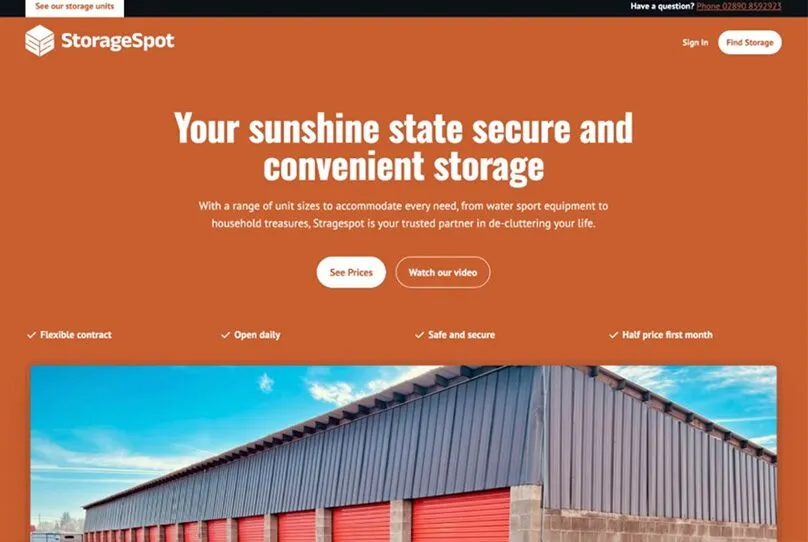
Every Stora operator gets a high-performing website designed to convert visitors into customers. Additionally, the online booking system is fully integrated so customers can complete a valet booking end-to-end in minutes.
Automate payments, billing, and recurring charges
Stora handles all payments inside one platform:
- Customers pay upfront for pickups
- Recurring storage charges run automatically
- Late payers are restricted from access until payment succeeds
- Invoices are generated and sent without staff intervention
For valet services, this means you aren’t chasing payments or manually calculating fees for pickups, boxes, or returns.
Reduce admin with a fully connected system
When a customer books, Stora automatically creates their account and:
- The correct pricing tiers and fees are applied
- Automated confirmation emails and SMS messages are sent
- Your team sees the booking in the dashboard
- Notes and details are attached to the customer profile
And because Stora includes a built-in CRM, you can track leads, follow up on partial bookings, and measure conversion rates without extra software.
Integrate pickups with smart access and facility operations
If your valet model connects to a controlled loading zone or requires timed facility access, Stora integrates with major smart entry systems, which makes it easier to:
- Trigger temporary access codes
- Track which staff accessed which areas
- Keep a log of item movement
- Automate overlocking for unpaid accounts
This keeps your valet workflow secure and consistent without extra manual steps.
Launch Your Valet Storage Service the Smart Way
Shifting to a valet storage solution can transform how your company serves customers.
When you combine streamlined operations with the right technology, you create a service that’s easier to run, more profitable, and more accessible to people who want storage without the usual hassle.
For many operators, valet storage becomes the moment they move from simply renting units to offering a fully realized experience that customers trust.
When you design your workflows to protect belongings, keep pickup and return processes straightforward, and ensure everything stays secure, you position your business as the most forward-thinking option in your market.
If you’re ready to grow without adding unnecessary clutter to your day-to-day operations, a valet model gives you a clear path forward.
Ready to see how Stora helps operators launch, automate, and scale valet storage? Book a free Stora demo today.